
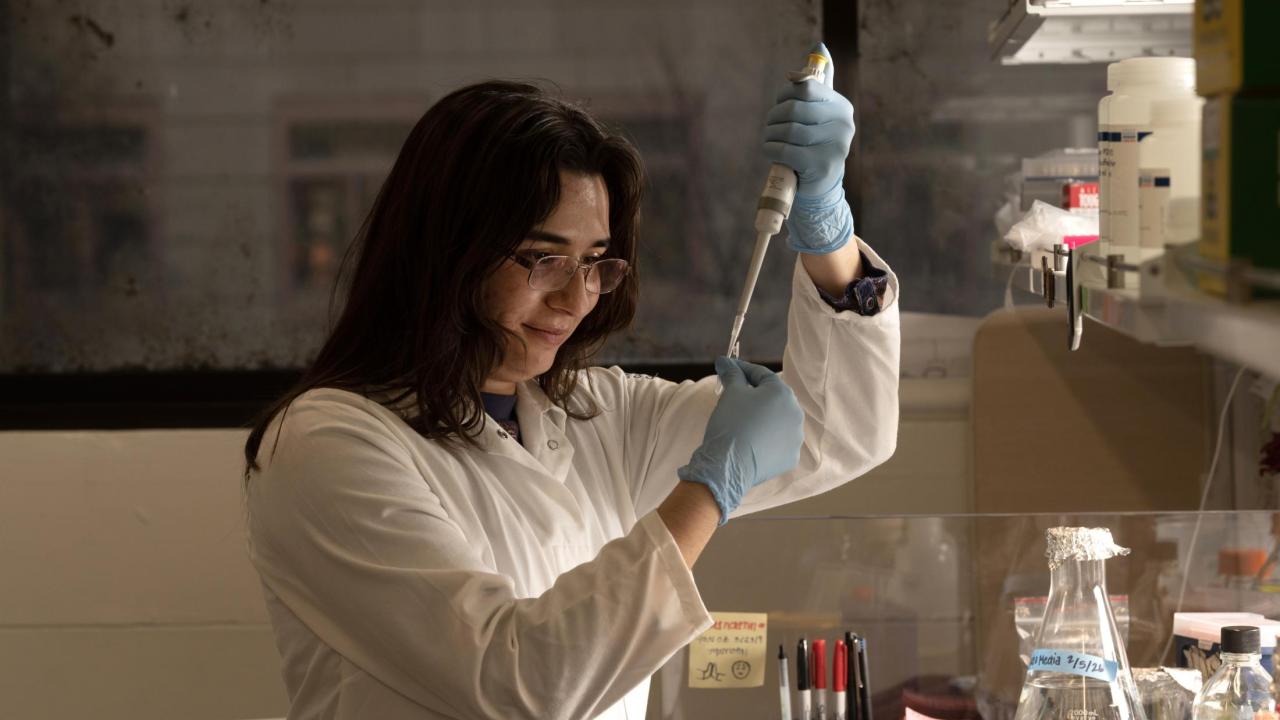
Fourth-year biological sciences major and Barry Goldwater Scholar recipient Azucena Virgen studies the regenerative biology of Hydra — a freshwater organism known for its ability to regrow entire body parts — at the UC Davis Juliano Lab. What began as a fascination in a high school biology class in her hometown of Woodland, California, grew into a long-term goal to lead a research lab and mentor future scientists.
“When I first learned about Hydra and how they regenerate from nothing, it was so incredible,” Virgen said. “I find it poetic that I can contribute to this research in even the smallest way to potentially help change the lives of so many people.”
Curiosity in action
UC Davis is classified as an R1 research university, which marks schools with the highest level of research activity. This distinction reflects the scale and impact of discovery across campus — and undergraduates play an active role in it.
"I felt out of place when I first joined my lab, but I soon grew into both a scientist and a person. I learned that labs value curiosity more than experience, and that is what keeps research moving forward."
— Azucena Virgen
Fascination to foundation
Virgen knew she was interested in research at the start of her first year at UC Davis. However, she did not know how to turn that curiosity into a career. The Juliano Lab helped her realize she could contribute meaningfully to science without following the pre-med path she initially planned to follow.
In the lab, Virgen studies how specific proteins, known as Wnt proteins, signal cells to regenerate Hydra tissue after injury. Under a microscope, she carefully removes the animal’s heads — each no larger than a grain of rice — and tracks how protein expression changes as regeneration begins. The work requires precision, patience and it demands that she think critically about how experiments connect to broader questions in human developmental biology.
The lab environment also teaches her more than just technical skills. It provides close mentorship and a clear pathway into the scientific community. Graduate students and the project’s principal investigator Celina Juliano, challenge her to defend her reasoning and refine her experimental design, which strengthens her independence as a researcher.
Beyond the lab, programs such as the Biology Undergraduate Scholars Program, Advancing Diversity in Aging Research and Maximizing Access to Research Careers expanded her network and provided funding and professional development opportunities. Together, these experiences established a strong scientific foundation that Virgen said shape her long-term goals in research leadership.
Growth and research leadership
Virgen believes that her support system, both within the Juliano Lab and through UC Davis research programs, was necessary for her to become the researcher she is now. She and Juliano encourage undergraduates who want to do research to take advantage of the resources available on campus.
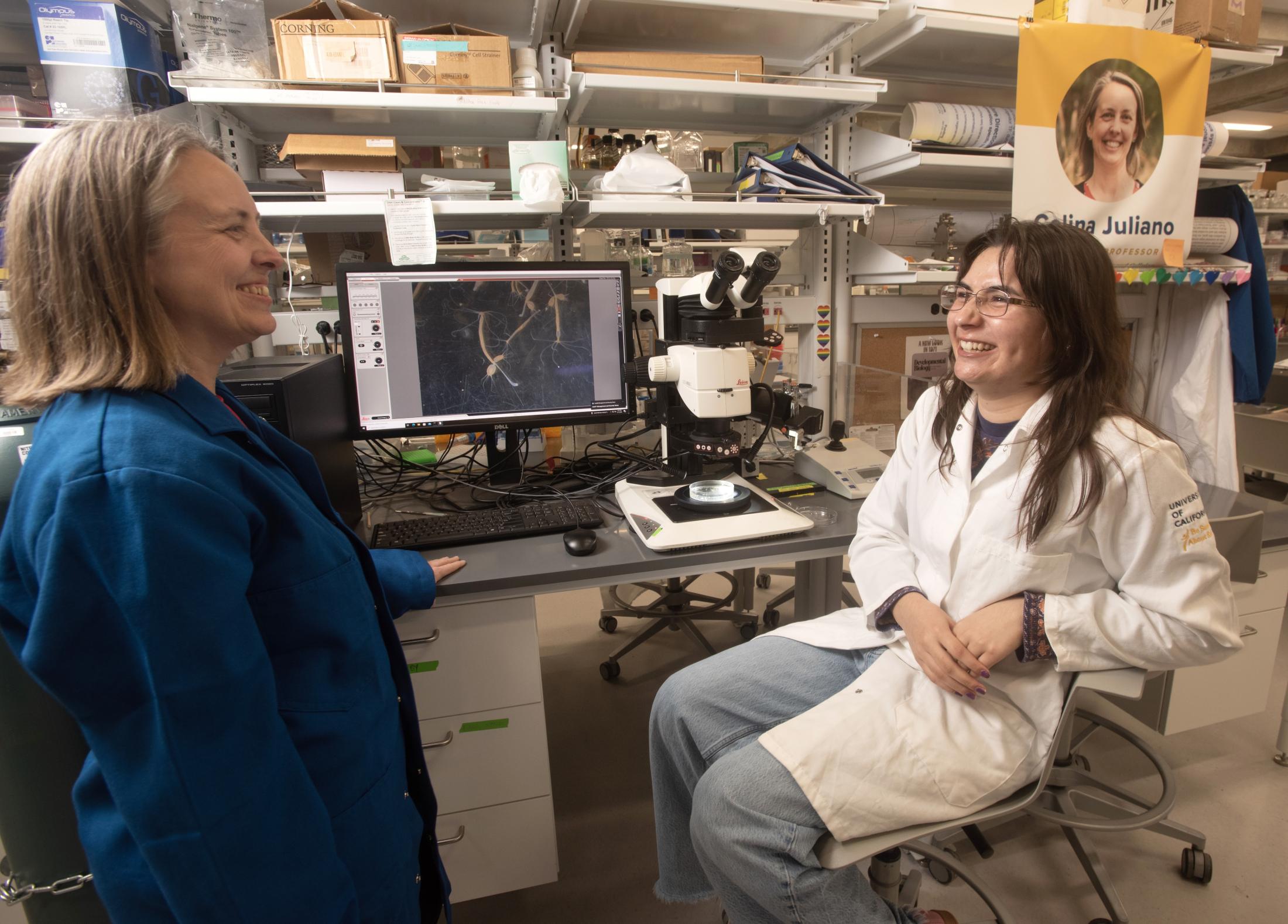
“Students think they need to possess a certain amount of knowledge to apply to labs,” Juliano said. “No matter what knowledge or experience they come with, they will need to start from the beginning when they come into a new lab. My main piece of advice is to create a clear set of intentions that guide you as you start to submit applications.”
Juliano said Virgen’s strong interest and engagement in the lab helped her stand out. Still, Virgen said she struggles with imposter syndrome like many others, especially as she applies to graduate school.
“It’s very hard to get over that feeling, but everyone in the lab looks out for you and makes sure you feel heard,” Virgen said. “No one has ever made me feel less than for not understanding something basic.”
This support guides her to pursue a path rooted in research and mentorship. She plans to earn a doctoral degree, lead her own research, teach at a university level and create a community where students feel celebrated as scientists.
“I want to share with them the same excitement and curiosity that drove my own journey,” Virgen said.
Watch Azucena's story on the UC Davis YouTube channel.