
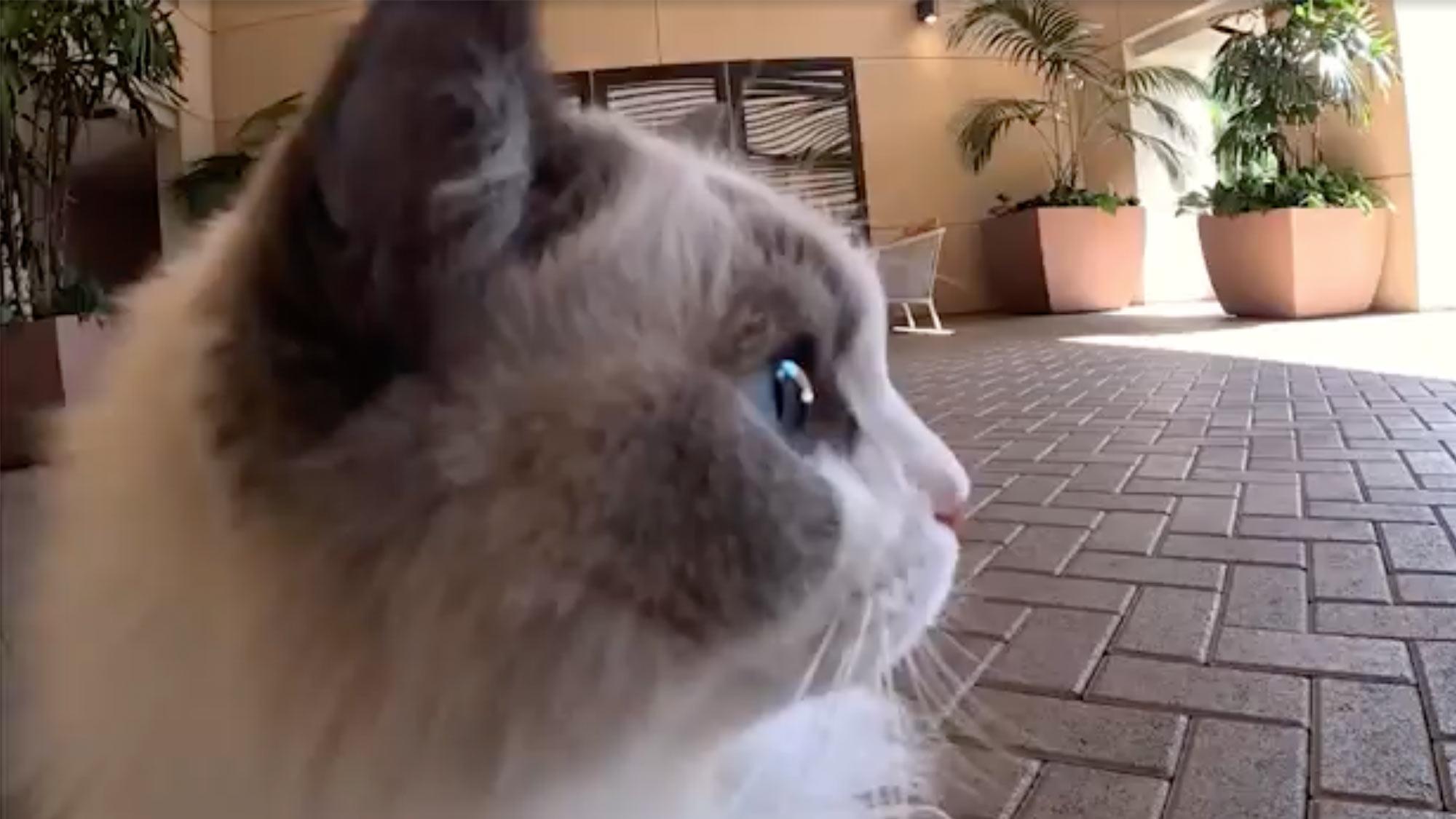
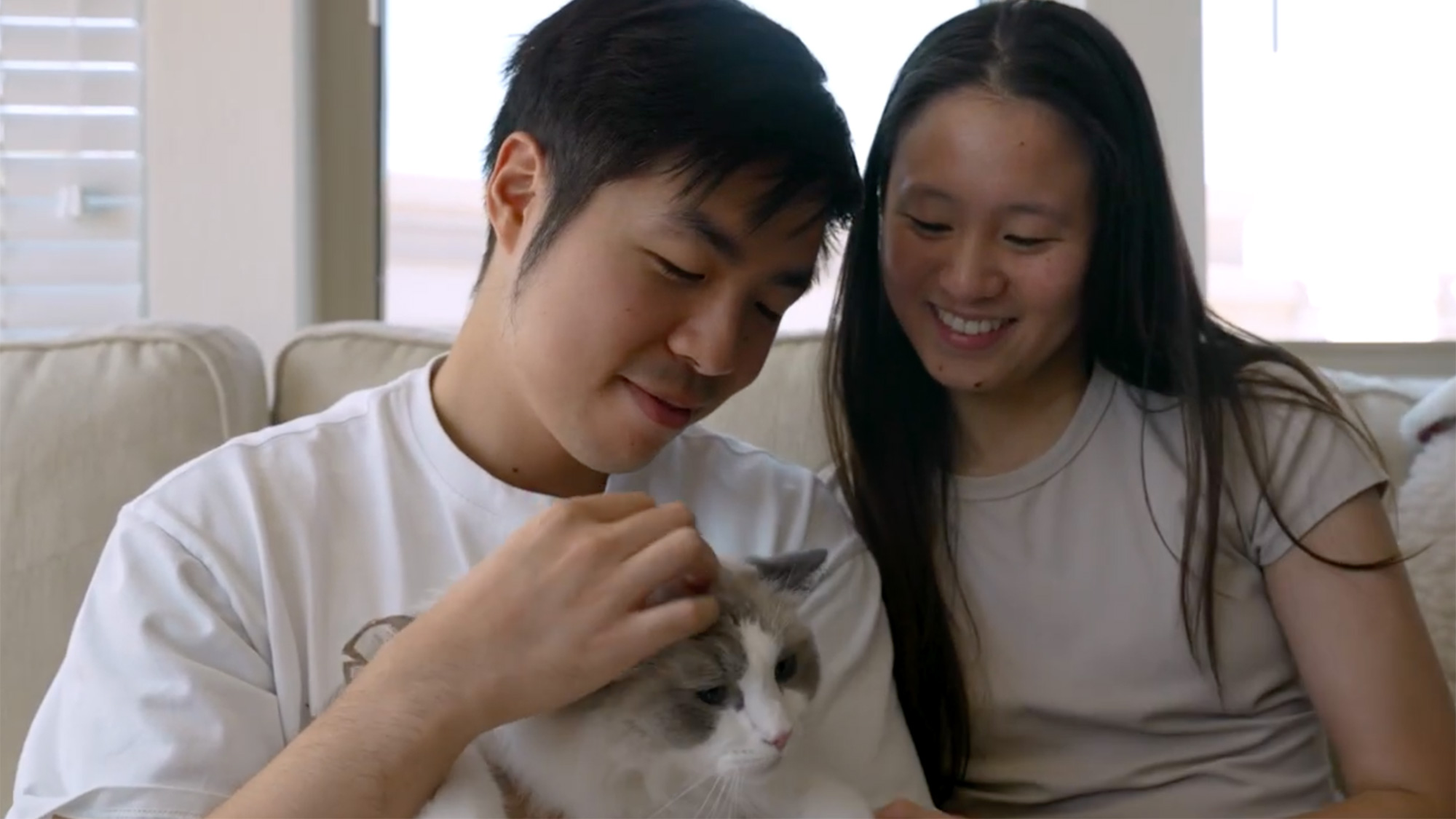
When Tommy Ma and Tiffany Pan adopted a 3-month-old Ragdoll kitten named Lychee in 2022, they expected joy, not heartbreak.
“Lychee was a dream come true,” Pan said. “Growing up, I’d never been allowed to have any large pets. Even cats are considered a large pet in my family.”
Just weeks after coming home, Lychee fell gravely ill. He began showing signs of feline infectious peritonitis, or FIP, a disease that was once fatal for cats.
The disease, caused by a mutation in the common feline coronavirus, triggers a catastrophic immune response. It leads to inflammation, organ damage and, in nearly all cases, a rapid decline. But that’s starting to change. With groundbreaking research, a diagnosis of FIP is no longer a death sentence, and the implications may extend well beyond veterinary medicine.
In their search for answers, Ma and Pan discovered an experimental clinical trial at the UC Davis School of Veterinary Medicine. The university was among the few institutions testing a promising antiviral drug for FIP. Lychee was accepted into the trial.
The reaction was almost immediate.
“We saw the progression from him getting better, like he went from totally sleepy, not really wanting to eat at all, to suddenly playing with toys and eating food,” Pan said. “He was full of life again.”
Lychee’s recovery wasn’t just a personal miracle. It became part of a growing body of evidence that FIP can be treated, and that lessons learned in cats might offer insights for human medicine.
“The antiviral drug is proving to be really effective at killing the virus,” said Amir Kol, an associate professor of pathology, microbiology and immunology at UC Davis. “It really revolutionized feline medicine — the fact that FIP is no longer a deadly disease and cats can survive that.”
Federal grant instability threatens progress across fields
UC Davis has long stood in the top tier of U.S. research universities, driving forward innovation that transforms lives. From pioneering new medical treatments to developing innovative technology, the university is a birthplace of scientific progress. However, the university’s ability to continue this groundbreaking work is now in jeopardy, as the federal government — the single largest funder of UC Davis research — has terminated and threatened grants.
“Things change so rapidly,” said Simon Atkinson, vice chancellor for research at UC Davis. “That leaves us in a very confusing situation where we've had a whole slew of research awards that were terminated.”
The recent government shutdown only amplified concerns about the future of long-term research funding. Atkinson warned that the administration may leverage fiscal uncertainty to redirect resources toward its favored projects, depriving scientists of their expert discretion. Areas such as climate change, health equity and gender-affirming care may see sharp declines in support.
In this shifting environment, UC Davis and the UC Office of the President are engaging with lawmakers across party lines to protect research funding and explain the real-world benefits of academic science. The challenge, Atkinson said, lies in reframing the narrative around higher education.
“Elite institutions of higher education in particular are seen by a lot of people as not doing anything for them,” Atkinson said. “We can talk about the discoveries that come out of university research, such as disease-resistant crops, that make our food supply more secure.”
Or advancing our understanding of long COVID-19 through groundbreaking FIP treatment.
FIP research team finds links to long COVID
Even after successful FIP treatment, many cats continue to show signs of chronic immune activation and organ damage, conditions that mirror some human experiences of long COVID-19. Kol and his team are seeking to better understand the connection and help better immune recovery in humans with long COVID.
“COVID has a huge range of presentations, all the way from non-symptomatic to people who are dying,” Kol said. “FIP would be like a severe COVID, and then what we’re trying to see is if we can treat those cats, other than the antivirals, with a similar therapy that will help in their long-term ability to regenerate and build their immune system.”
Though FIP and COVID affect different species, both coronaviruses target the immune system in complex ways. And in both cases, researchers are finding that stopping the virus doesn’t always mean reversing the damage.
The power of translational medicine for pets and people
For Ma and Pan, Lychee’s illness and recovery left them thankful — and hopeful that the treatment might be even more wide reaching.
“We were welcomed by the care team at UC Davis,” Pan said. “We are so grateful they provided Lychee with a lot of care and empathy.”
Cats, dogs and other companion animals often experience diseases that closely resemble human illnesses. Because they share our homes, environments and even microbiomes, they can serve as more translational models for certain conditions than traditional lab animals.
Yet, funding for veterinary research remains limited. The majority of biomedical research dollars in the United States — including for the UC Davis FIP trial — come from the National Institutes of Health, which primarily supports human health research.
Kol said he hopes that cases like Lychee’s can help change that.
“There are very few veterinary-focused foundations, but they have very limited funding compared to NIH,” Kol said. “It’s a drop in the bucket.”
Technology that empowers Alzheimer’s patients
When Alzheimer's disease researcher Alyssa Weakley witnessed her grandmother slowly lose pieces of herself to cognitive impairment, she also saw how small acts of independence can bring back light even on the darkest days.
Weakley’s web-based application called Interactive Care, or I-Care, is designed to help older adults experiencing cognitive impairment manage daily activities and maintain communication with family members. Her research, supported by the National Institute on Aging, tackles a challenge the healthcare system has wrestled with for decades: how to support individuals with mild cognitive impairment, often a precursor to Alzheimer’s, before symptoms escalate and independence is lost.
“My overall goal is to meet the needs of both the person who wants to be independent and also the family members who are in this remote caregiving situation and are worried about their loved ones,” Weakley said. “I want them to have that sense of independence.”
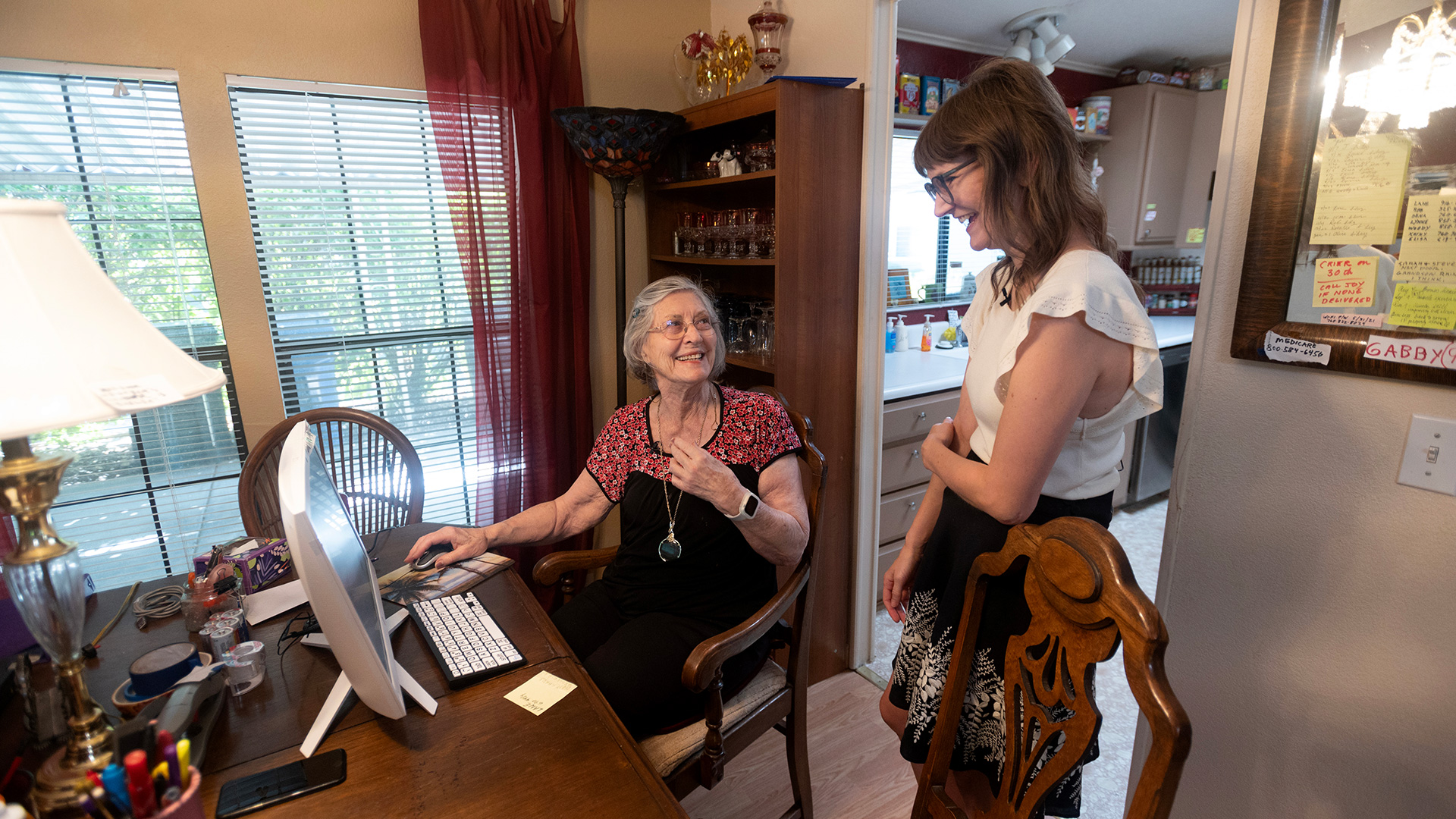
Unlike many existing tools that focus solely on caregiver monitoring, Weakley’s work is reshaping the role of assistive technology. Through an iterative co-design process, her lab works directly with older adults with cognitive impairment and their families to create tools they can use independently, she said. This includes multi-layered reminders to support daily routines, sensors that track medication adherence and simple video-chat features to keep families connected.
Leanne Patton understood the stakes personally. After oxygen deprivation during surgery years ago left her with persistent memory issues, she developed workarounds such as a notebook for reminders, handwritten notes scattered around the house, routines that were helpful but hard to maintain.
Now, she is testing new technologies including a customized computer platform and smartwatch system designed to help her navigate her day safely and independently.
“I am so excited to be able to have the opportunity to deal with this problem,” Patton said. “I am sitting here knowing there are going to be people everywhere who relate to and can utilize this.”
For innovations like these to reach the people who need them most, researchers must complete rigorous clinical trials. That requires significant, long-term funding — something Weakley stresses is often the biggest barrier.
“Research is expensive, and if you're going to design interventions that are going to help the disease, you need to show that they actually work,” Weakley said. “Otherwise, it's just speculation.”
Added Weakley, “There's nothing that's going to motivate me more than thinking about a family that can benefit from this. And also my grandma, I just keep a little picture of her on my desk.”
Agriculture research strengthens water and food systems
California’s fields and orchards feed the nation, but they also sit at the epicenter of one of the most pressing environmental challenges of our time: sustainable water use in agriculture. While researchers across the state are racing to solve problems that determine the long-term resilience of California’s food system, their ability to deliver hinges on strong, consistent funding.
The state’s water system is under stress. Communities are facing depleted aquifers and shrinking snowpacks. In response, laws like the Sustainable Groundwater Management Act, or SGMA, require groundwater basins to reach long-term sustainability, a shift that affects nearly every grower in the state.
Isaya Kisekka, a professor of hydrology and agricultural water management in the Department of Land, Air and Water Resources and Department of Biological and Agricultural Engineering, leads research on sustaining groundwater use in irrigated agriculture.
“Agriculture is the largest consumptive user of water in California and in the world for that matter,” Kisekka said. “We want to use water in a way that meets today’s needs without jeopardizing those of future generations.”
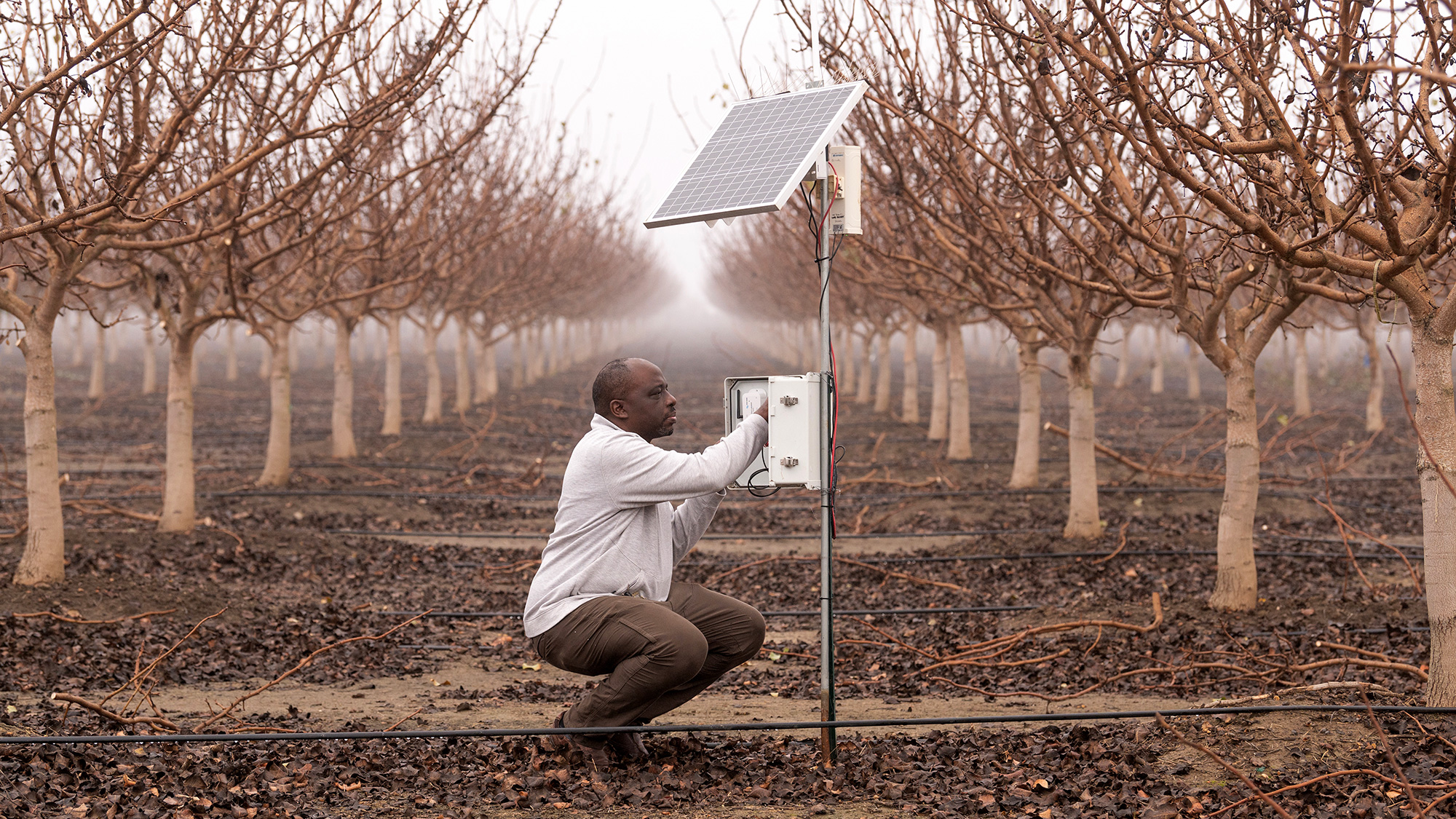
Now, researchers are developing tools that help farmers navigate new regulations and protect water supplies while maintaining productive, profitable operations and co-benefits for the environment in areas like enhanced soil health.
“We had this $10 million federal grant from the U.S. Department of Agriculture, and the work we have done under that project wouldn't have been possible without it,” Kisekka said. “The work was focused on how we develop technologies to help agriculture survive under SGMA.”
One collaboration with Karen Merino of Cederquist Farms in Madera County illustrates the impact of well-supported research. Merino grows pistachios with reduced water supplies, and she partnered with UC Davis researchers to adopt advanced irrigation strategies informed by real-time data. The result? The farm maintained economically viable yields while staying within its constrained groundwater allocation.
“We learned and shared data with Karen, and they adopted some of our strategies,” Kisekka said. “Before, they were doing infrequent irrigations, and now they are doing data-driven high frequency low volume irrigations, which means they are applying small amounts every day, which helps the trees to avoid yield-reducing water stress.”
Despite the promise of these innovations, researchers and farmers face steep challenges. Farmers face economic realities that can limit their ability to invest in new technologies. Low commodity prices, particularly in crops like almonds, have squeezed growers’ budgets, making adopting sustainability tools more difficult, even when they want to.
Building trust is another challenge. Many emerging tools rely on AI-driven algorithms, which require users to understand, trust and adapt to new digital workflows. This learning curve means outreach and education are just as important as the innovation itself, Kisekka said.
Unexpected obstacles emerge as well, such as vandalism and theft of monitoring equipment from fields, which creates costly setbacks and undermines research momentum.
These realities highlight a fundamental truth: Without stable funding, research slows, adoption stalls, and California moves further from a sustainable water future.