
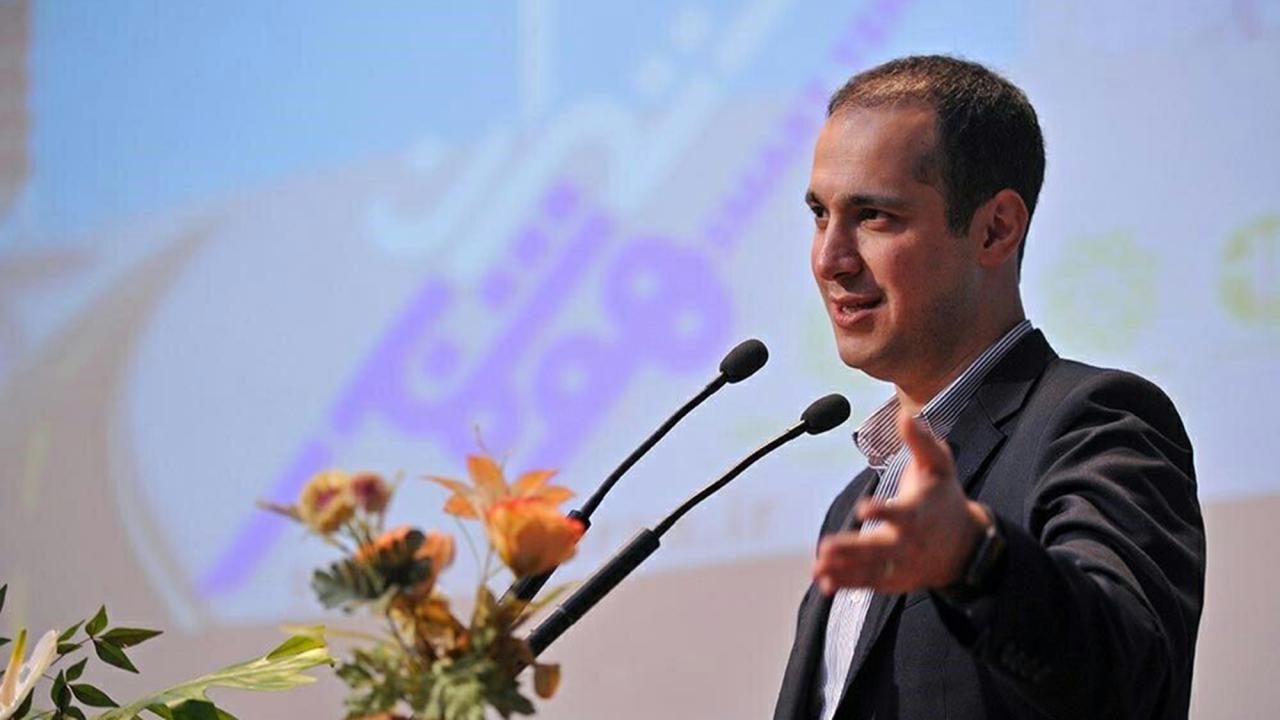
Kaveh Madani, Ph.D. ’09, noted the irony of the day he found out he had won the 2026 Stockholm Water Prize, the world’s highest water research honor.
“It was a big surprise,” he told UC Davis Magazine. “And then I said, ‘How ironic, because eight years ago at this time, I was under arrest.’”
Based in Toronto, Madani is now director of the United Nations University Institute for Water, Environment and Health and research professor at City College of New York CREST Institute.
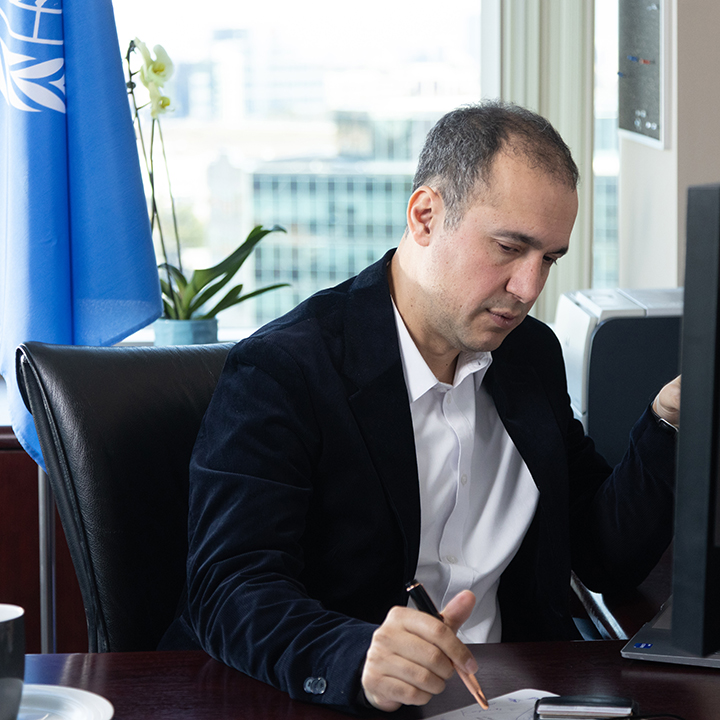
His path to get here has been wide-ranging. He is a leader in water science, and has taught at universities around the world. While working for the government in Iran, eight years ago, he was accused of espionage and labeled a “water terrorist.”
He is recognized for integrating game theory and decision analysis into conventional water resources management models and coining the term “water bankruptcy.”
In August, he will travel to Sweden for the honor, given by the king. The Stockholm Water Prize is awarded is awarded annually by the Stockholm Water Foundation in cooperation with the Royal Swedish Academy of Sciences and honors those whose work contributes significantly to the sustainable use and protection of the world’s water resources. Madani is the second UC Davis affiliate to receive the honor after Takashi Asano, now professor emeritus, given in 2001.
A water-focused career path
Born in Tehran, Madani knew of severe water challenges facing Iran, as both his parents worked in the water sector.
“They were talking about it, reading journals, papers, learning about the dams that are being built in the country,” he said. “So that sort of curiosity was there, or passion, if you will.”
After earning his bachelor’s at University of Tabriz, he went to Sweden for graduate studies before landing at UC Davis for his Ph.D. There, he credits his advisor, Jay Lund, now emeritus distinguished professor of civil and environmental engineering, for encouraging him to expand his scope.
Madani earned his Ph.D. in civil and environmental engineering, but said he also studied political science and economics, aiming to learn from different perspectives.
“[Lund] was someone who was also thinking out of the box and gave me the courage to do things that were unusual, to the extent that I was getting him frustrated sometimes with the things I was doing,” Madani said. “But he gave me the courage and the confidence to do those things, and here we are, I think.”
He added, “he always said my game theory work can distinguish me and encouraged me to pursue that.”
Game theory is a mathematical study of cooperation in conflicts, which Madani has applied to water resource management. “You put a game theory lens on you want to understand why people do certain things, so you have an answer or a justification.”
Understanding the reasons behind even bad decisions helps direct negotiation, he said.
After UC Davis and several years on the faculty at the Imperial College London, Madani was invited to return to Iran as deputy vice president and the deputy head of the Department of Environment. While there, he backed reforms to improve water governance and transparency and engaged in national environmental campaigns.
But because the elected government is separate from the Islamic Revolutionary Guard Corps, he was quickly targeted, arrested and interrogated.
“Even with my game theory knowledge, I could never imagine that I would be arrested upon arrival in Tehran or I would be named a spy because of talking about water shortage and water issues,” Madani said. “Now that I'm alive and I'm free, I can say those moments made me stronger to think about things differently.”
Madani was forced into exile, briefly returning to the United States as a fellow at Yale University, before taking his current roles.
A new way of looking at water scarcity
About a decade ago, Madani began to develop the concept of “water bankruptcy.” He explained that it was a reaction to the term “water crisis,” which implies a temporary nature of the problem.
In January, he published a paper in the Journal of Water Resources Management and then a report for the United Nations University, putting the concept in financial terms.
“[We are] claiming that the world has entered the era of global water bankruptcy,” Madani said. “Say we have a checking account — surface water — that gets recharged by nature. And then we have groundwater as our savings account. We have exhausted our checking account, gone after our savings account so our surface water systems, lakes, wetlands, rivers are shrinking, our groundwater level is declining. We are seeing all these signs — land subsidence, sinkholes, biodiversity loss, desertification, more wildfires, less soil moisture, and so on. I argue that this is no longer a temporary problem, it's a chronic issue, it's not going to go away.”
Like with real bankruptcy, facing the problem is the key to solving it.
Madani said that regardless of political affiliation, location, or profession, water is an issue everyone can agree matters.
“It is better to admit to a failure today because you can save the system,” he said. “Some damage is done already. But you can prevent further irreversible damages. Acting responsibly today would enable a transition that would save the world from collapsing or systems from collapsing.”