
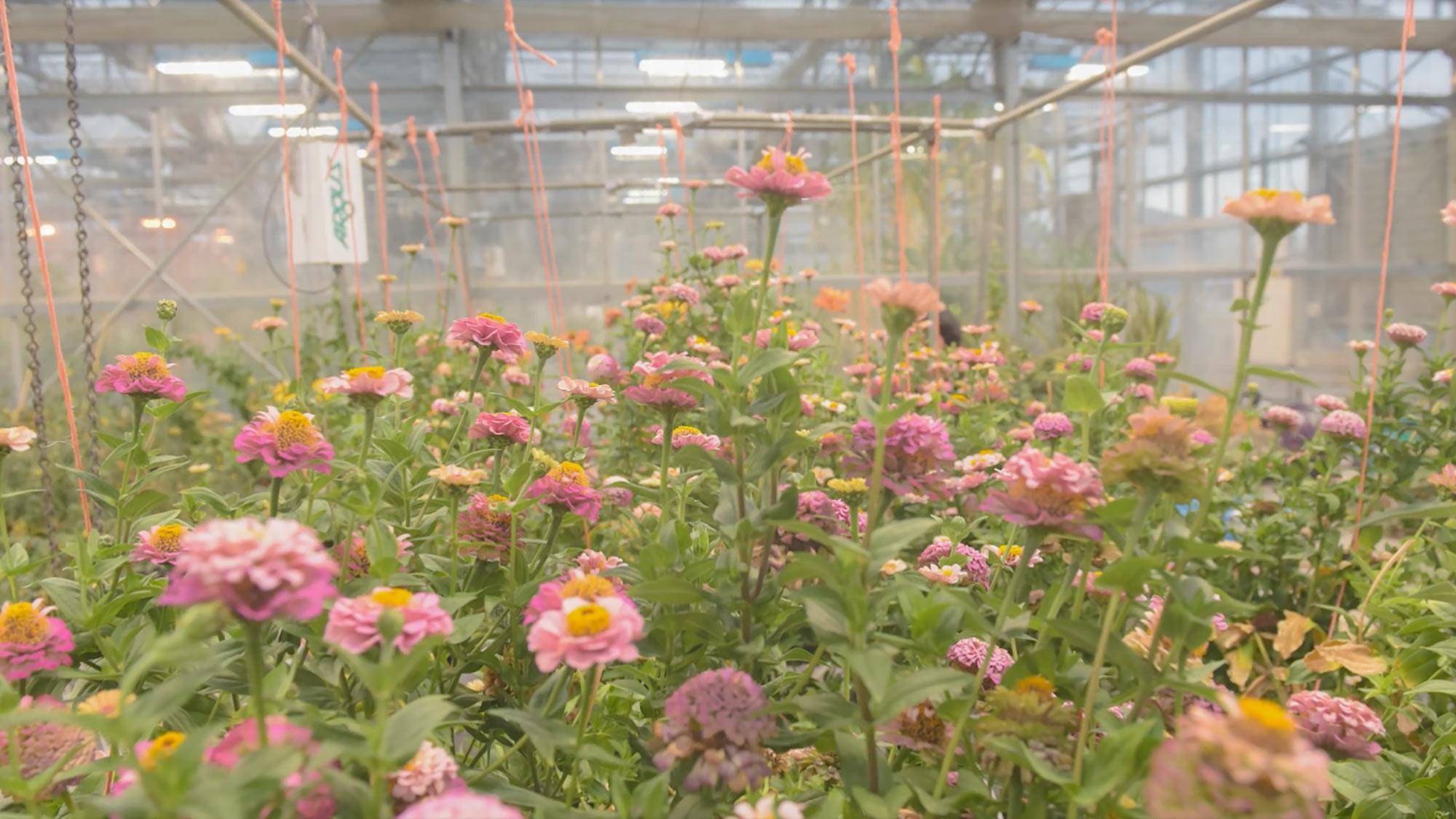
In a teaching greenhouse at the University of California, Davis, a group of students are working with zinnias they bred themselves — and named themselves. The Shirley, for example, comes in vivid and pastel shades and boasts a longer life in a vase and better resistance to disease.
These students are members of the Student Collaborative Organic Plant Breeding Education, or SCOPE, a student-led collaborative, that offers hands-on training in the science of breeding. It’s guided by faculty and staff in the Department of Plant Sciences, working with local organic growers on improving crop varieties for organic farming systems in California.
By naming the zinnias in the participatory training, SCOPE students have a larger sense of ownership over their projects.
“We wanted to have a theme for our crop. A lot of our grandmothers helped inspire us to garden and they’re really into flower farming,” Laura Roser, SCOPE coordinator, explained. “We were inspired by grandmothers’ names; all of our students brainstormed a bunch of names and then we picked out different ones.”
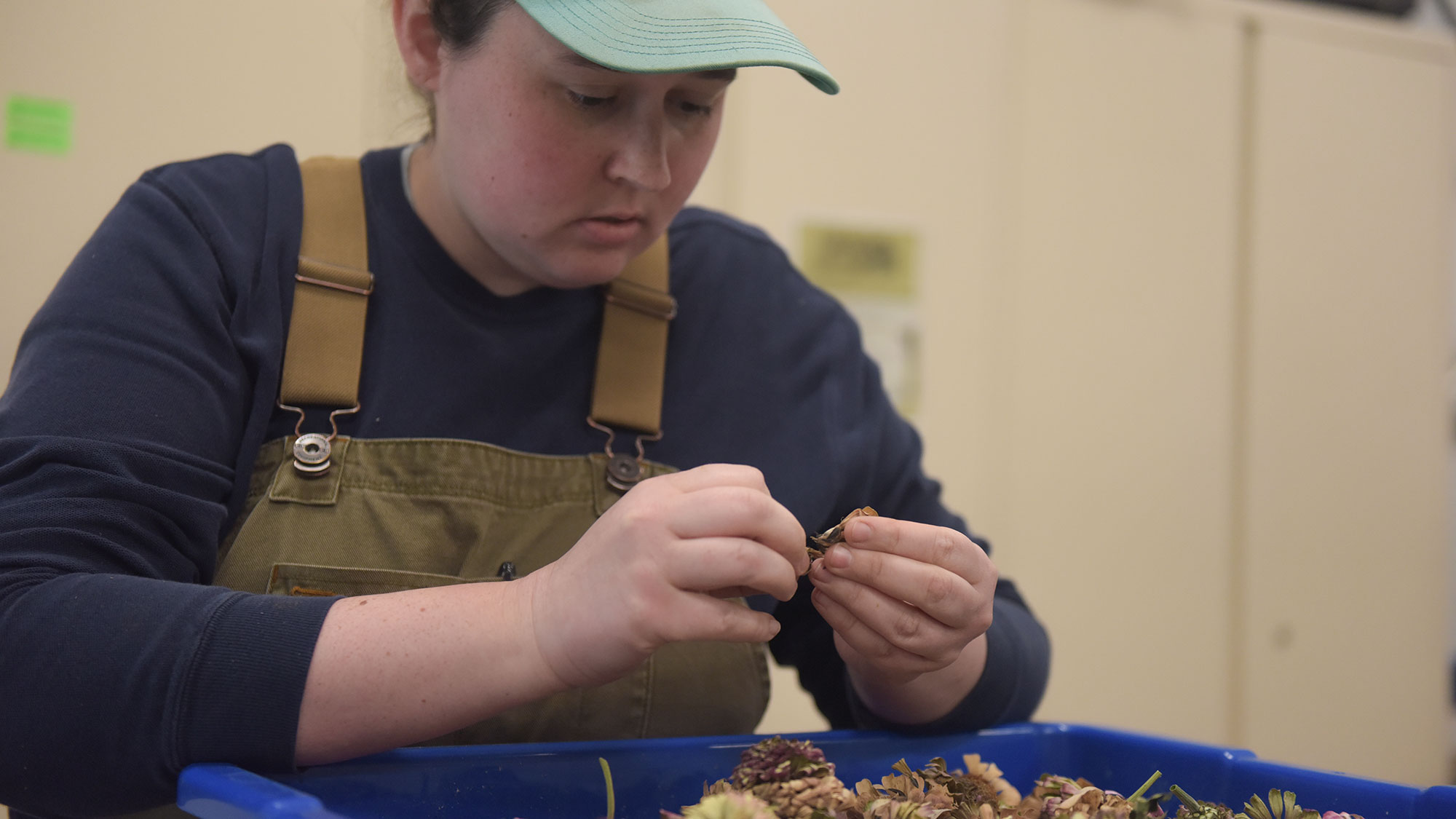
The SCOPE project offers internship credits and paid positions for current students at UC Davis through the Student Farm and at affiliated campuses. Volunteer opportunities are also available for graduate students, including as a breeding project team lead.
SCOPE’s work is funded almost entirely by the United States Department of Agriculture.
The project currently is operating on a three-year, $2 million USDA grant under the Organic Agriculture Research and Extension Initiative. But the project’s funding is in danger, with the grant expiring in August.
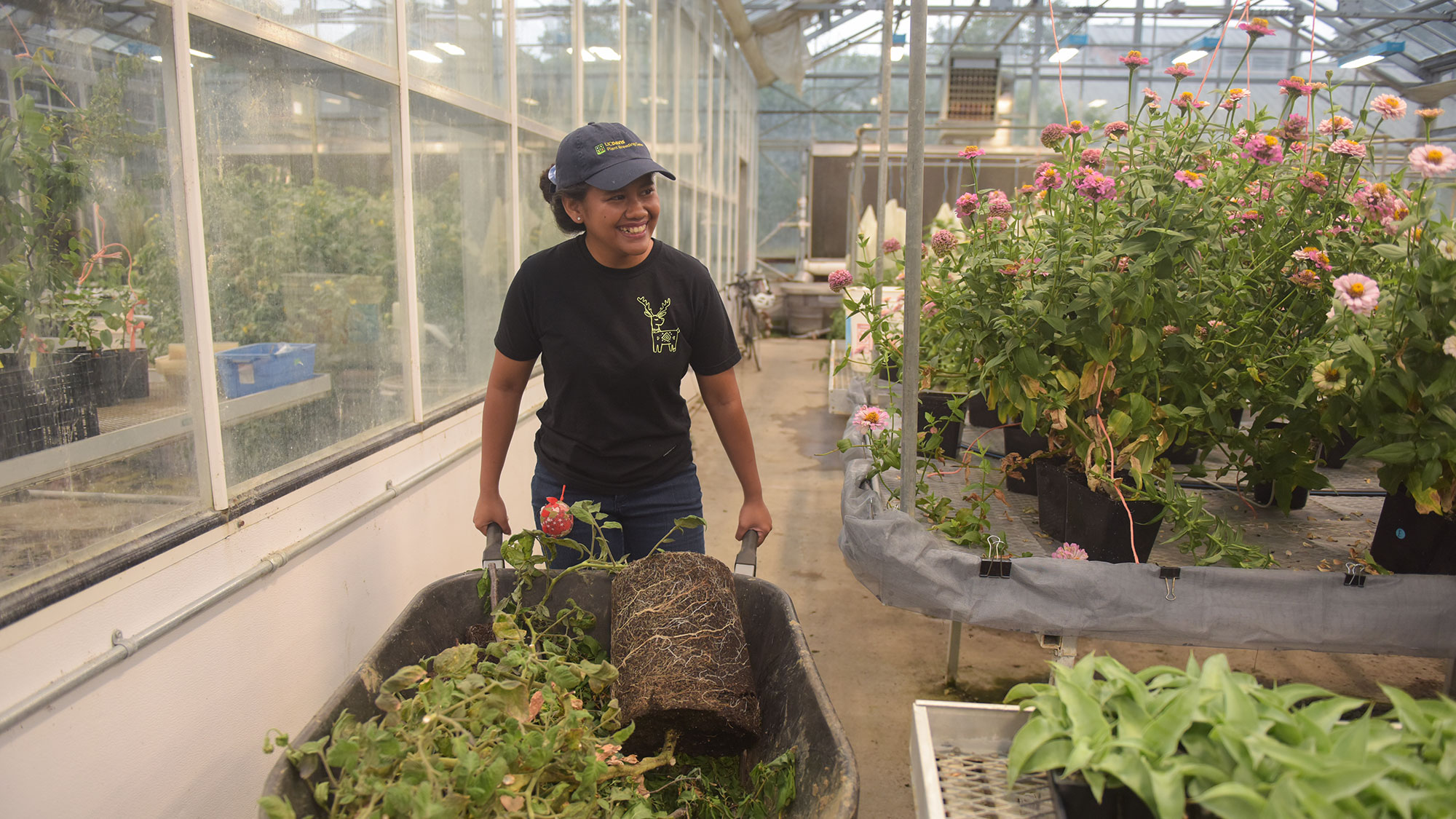
How plant breeding supports organic farmers
The organic plant breeding project was developed in 2015 in direct response to feedback from California's organic growers about a scarcity of seeds for cultivars that meet the needs of organic farming. The students also breed new varieties of tomatoes, wheat, spinach and celtuce (a type of lettuce).
“We started the project a few years ago because farmers had very clear and specific breeding goals for zinnias,” Roser explained.
Unlike tomatoes, which are self-pollinators, zinnias are an “outcrossing crop” — where pollen is moved between different plants — which created a new challenge, and learning opportunity, for SCOPE students.
“We had to figure out how to do isolated insect pollination at a small scale, which means buying flies and putting them in cages to pollinate the flowers,” Roser explained, “which is very common in breeding programs.”
Using traditional, field-based plant breeding methods, the new varieties are being developed on certified organic land at the Student Farm at UC Davis.
“Not only was it a useful skill for the students,” Roser noted, “it was also a specific goal that farmers wanted that was valuable for organic farmers in our area. ”
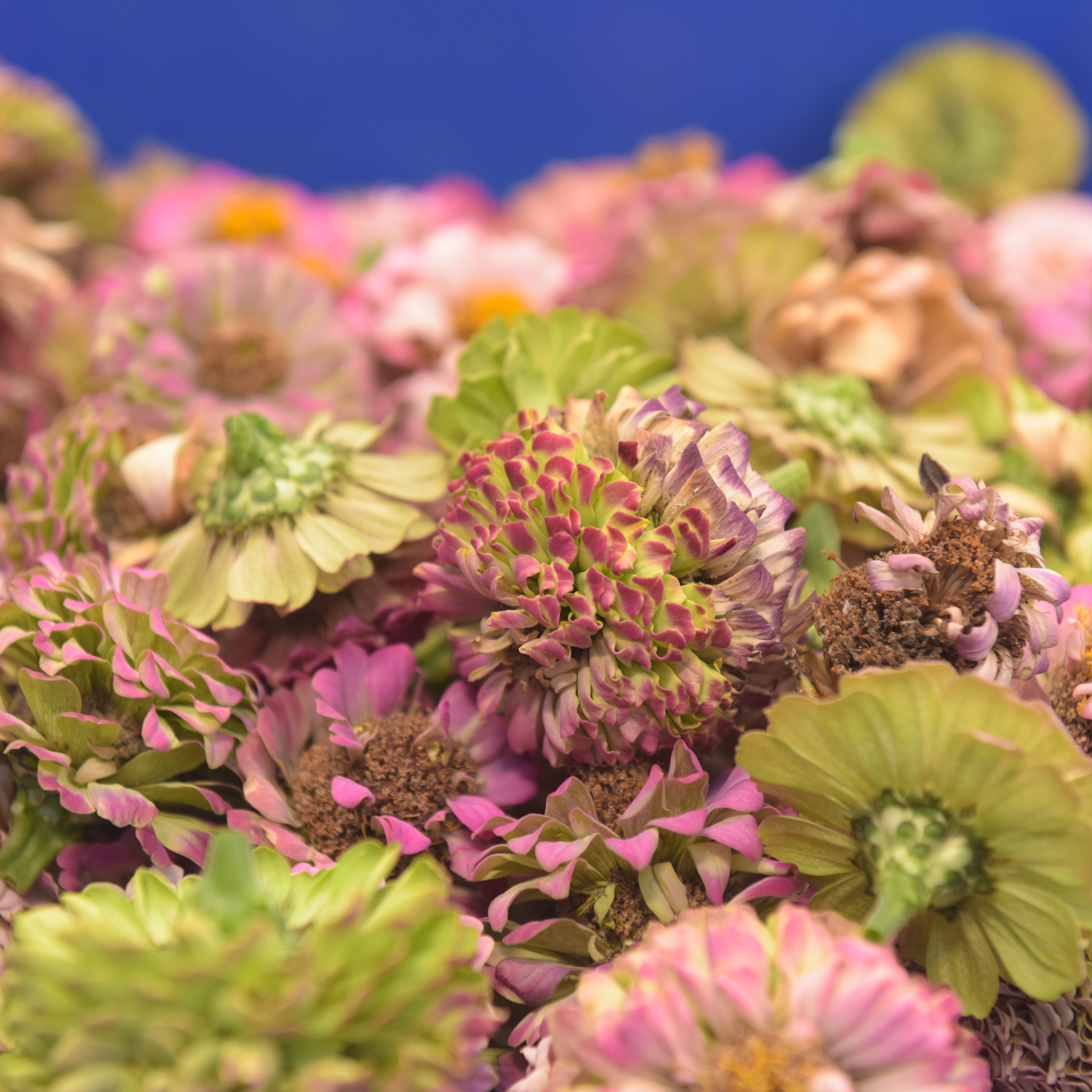
Plant breeding trials across California
SCOPE coordinates additional plant breeding trials at Cal Poly Pomona and UC Santa Cruz to breed for the hotter, drier conditions of Southern California and the cooler, wetter conditions of the coast.
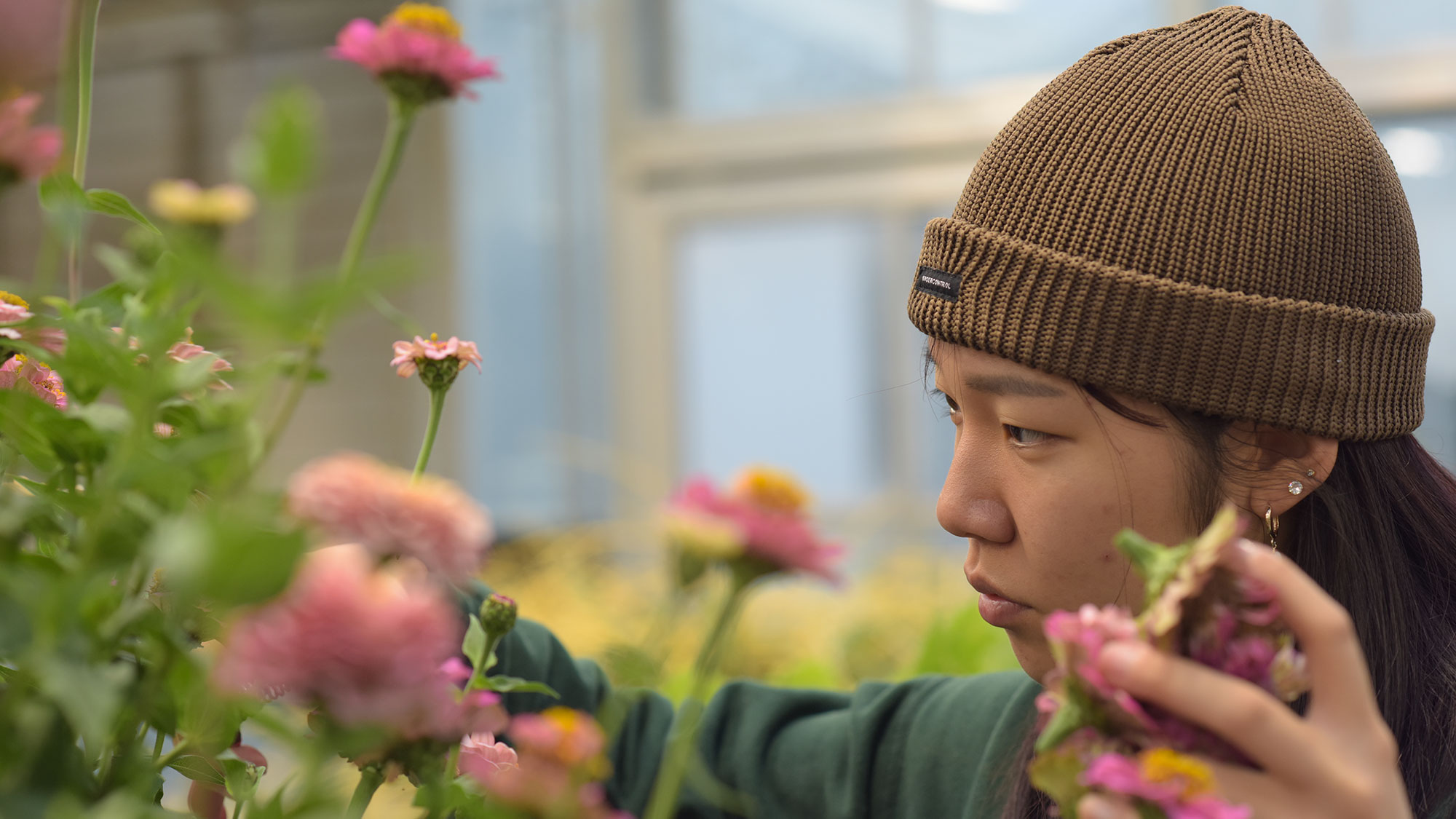
Fourth-year student Emily Chung is one of the lead student breeders. She joined SCOPE in 2024 after working as a Market Garden intern at the UC Davis Student Farm.
“Plant breeding is something I’ve never done before, so I came to SCOPE to learn that and see more research perspectives in agriculture,” Chung said.
The breeding objectives of SCOPE projects are based on input from local organic farmers and the Organic Seed Alliance, as well as the diversity of their cropping systems and growing seasons.
As part of her responsibilities, Chung coordinates seed and plant trials with local and out-of-state farmers. She quickly learned how to communicate with a workforce that’s “not always with their laptop” and to better understand “what their difficulties are and how to communicate with them more efficiently and effectively."
Chung also learned how to troubleshoot plant breeding tactics, including whether plants needed caging or “how to crossbreed tomatoes by collecting pollen and rubbing it onto the male flower,” she explained.
“I learned things at SCOPE that I wouldn’t be able to learn in another place,” she said.
Skills for future careers
SCOPE students use those experiences to make decisions as a team and about which varieties to continue testing and eventually release. Along the way, they also see the consequences of their choices. These experiences help them bridge from theoretical knowledge to practical application, preparing them for jobs in the real world.
Jackie Limon is a fourth-year plant sciences major with an emphasis in crop production and agroecology. She is a previous SCOPE member who is currently volunteering. Like Chung, she joined the UC Davis Student Farm in the Market Garden the spring quarter of her first year before joining SCOPE the following year. “I feel like there’s more varied experiences I can get,” Limon said. “Every day is a little different.”
SCOPE students go on to jobs in conventional breeding and seed industries that then supply ranchers and farmers with plants that thrive in warmer temperatures, use less water and do better at resisting insects and disease — crucial for fueling California’s $61 billion agricultural sector.
Limon said she hopes to leverage her SCOPE experience toward an internship this summer breeding watermelons and melons.
“SCOPE is giving me skills that I [need to] actually go apply for a job and get and work,” Limon explained. “It’s very cool to be able to do this during my undergrad and get these skills.”
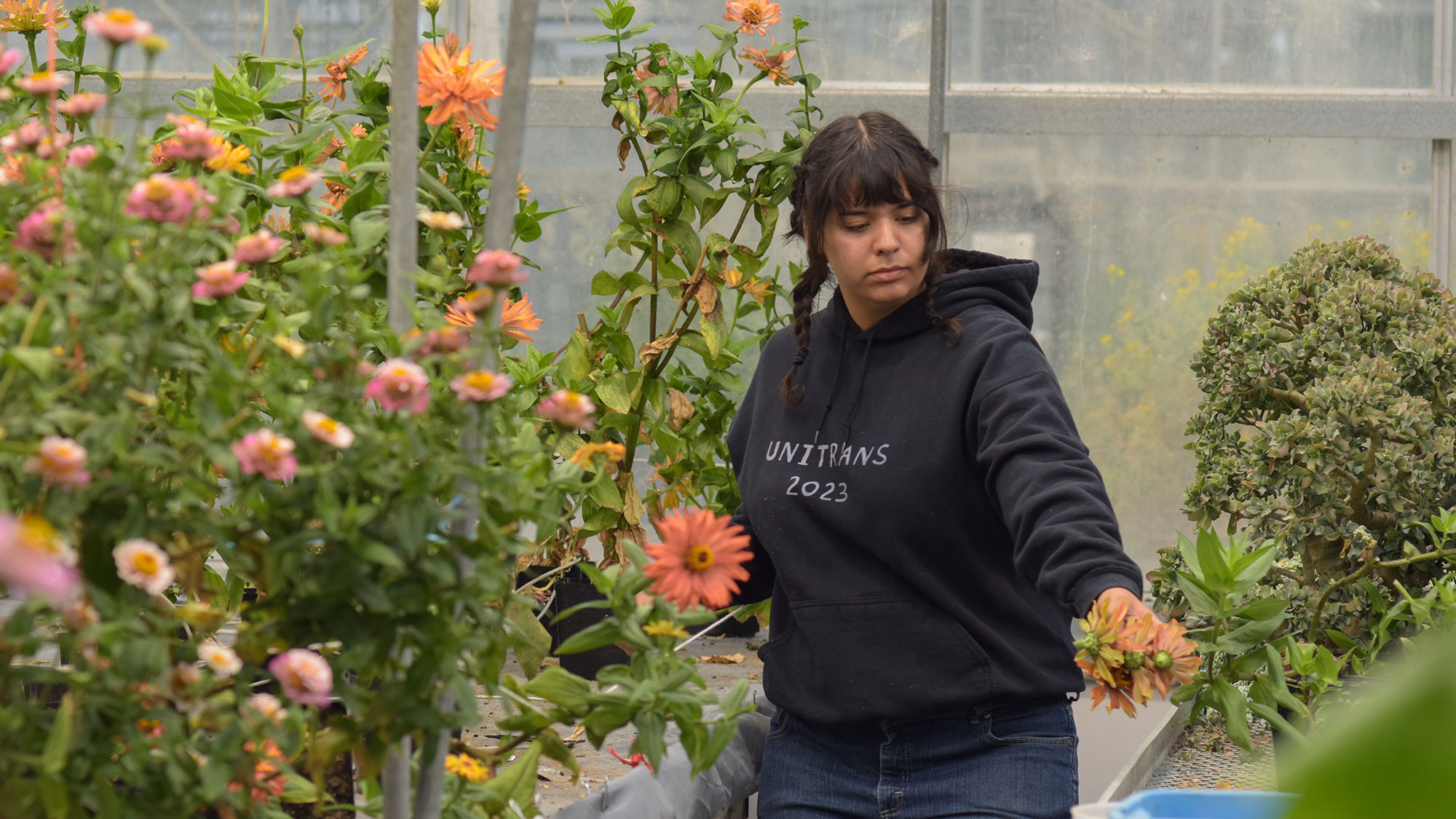
Limon enjoys fieldwork and described how, in the summers, zinnia flowers grow and turn the fields into a colorful array, as students and interns work early in the morning to beat the summer heat.
Zinnias are a year-round project for SCOPE.
“In summer they’re actively growing; in fall we harvest and collect the flowers. In the winter we save seeds. And then in spring we plant the seeds again,” Chung explained.
“Once the students get trained, and especially in summer, we come out every day. It becomes a very familiar task for everyone,” Chung said, with graduate students leading each of the crop teams to support. “The lead student breeders or experienced interns can teach each other and the newer students.”
Breeding crops for organic farms
Michelle Nalle is SCOPE’s graduate student lead breeder for tomatoes. She described how SCOPE is focused on organic, fresh market tomatoes. This includes Roma and heirloom tomatoes, as well as unique disease-resistant breeds like Orange Creamsicle. SCOPE participants also consider tomato shape, yield and flavor when developing their lines.
“It's interesting and challenging because, if you’re breeding for organic farming, your plants have to have more power,” Nalle said. “They have more [disease] resistance, because you cannot spray them with pesticides."
In addition to managing the breeding projects, SCOPE students participate in seminars about organic farming methods, plant breeding and project management. They also host events such as field days and taste tests to showcase their work to a broader audience. This includes undergraduate presentations to their peers, graduate students and faculty after each plant breeding season to determine whether to continue or abandon certain varieties, and ways to improve for future seasons.
“I learn a lot about communications and the way to understand farmers, what the market actually wants,” Nalle said. “SCOPE helps students listen to people and translate that into data that [that we can use to] back up our decisions on choosing our goal.”
The benefits of the SCOPE experience are obvious for many student participants.
“Undergrads are not only working in the field,” Nalle added, “but they learn how to make decisions, and their voices and opinions matter.”