

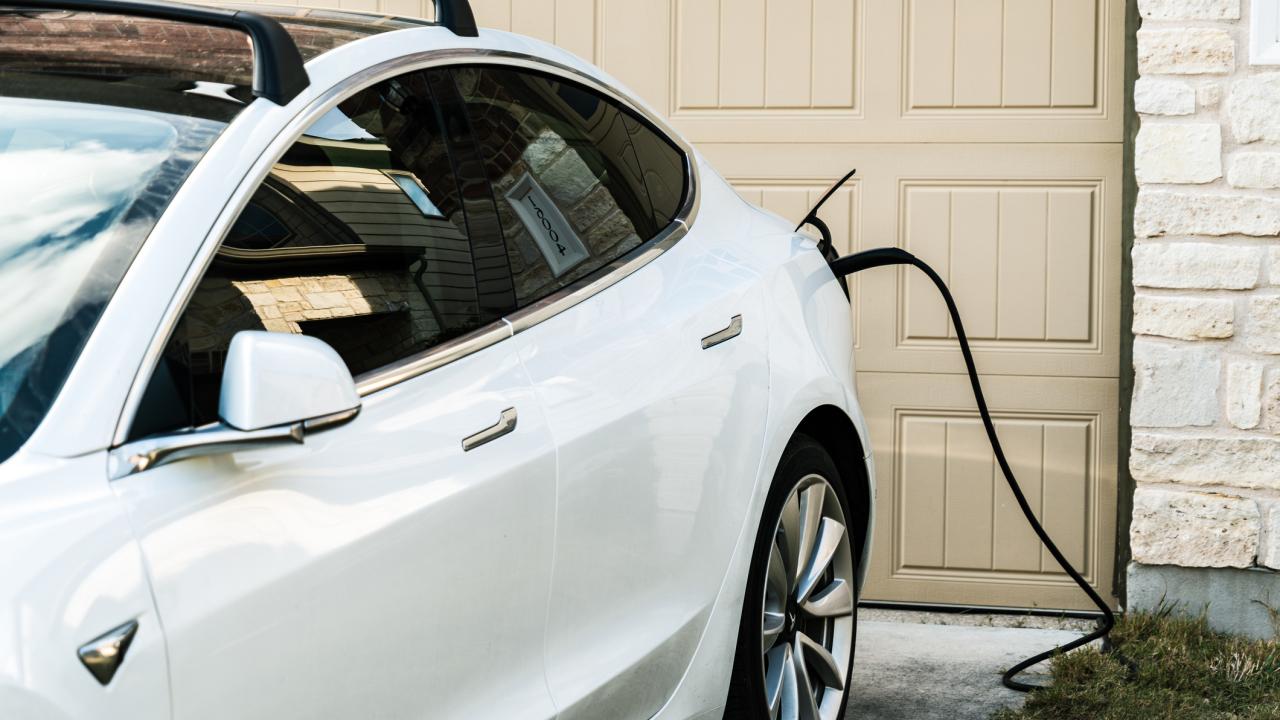
Electric vehicles are one important way for America to use less fossil fuels — driving down emissions that cause climate change and reducing exposure to oil price shocks that threaten economic growth. But as more households buy electric cars, they must also charge those cars, which typically happens at night. So many EVs charging at once can put a strain on local electric grids. Some utilities are trying to lessen this burden by scheduling EV charging themselves, spreading charging out so that fewer vehicles need power all at once. However, this requires EV owners to cede control of their car’s charging behavior to their utility. But would EV owners grant this control? A new working paper finds they largely will not.
“Electric vehicles are critical to both our energy security and our efforts to address climate change,” said study co-author Fiona Burlig, an assistant professor at the University of Chicago Harris School of Public Policy. “Unfortunately, our grid is not built to handle a massive, rapid switch to EVs — leaving utilities wrestling to find ways to cope with the strain. Our study looks at one tool that could help.”
Burlig and her co-authors, James Bushnell and David Rapson from UC Davis, examined the behaviors of households served by Peninsula Clean Energy — a San Francisco Bay Area utility located in an area that has one of the highest EV adoption rates in the country. When invited to enroll in a managed charging program, fewer than 5 percent of EV households signed up — even when they were given an incentive of up to $40 per month to participate.
Those who signed up enrolled through a smart EV charging app that was linked to their EV. Every time they plugged in their EV to charge, they were asked by the app if they wanted to allow the app (i.e. the utility) to decide the best time to draw power based on when electricity was cheapest and cleanest. Even of those who did sign up, a full 20 percent of households never granted the app the ability to adjust their charging.
Of all the households in America, these are the ones where the program should have had a great shot to work.” — James Bushnell, UC Davis economics professor
“These were exactly the types of households one would expect to participate in a program like this, and still, they did not,” said Bushnell, an economics professor and co-director of the Davis Energy Economics Program. “They are early EV adopters, making us think they would be particularly enthusiastic owners. They live in the heart of Silicon Valley, making us think they would be more willing to engage with apps. And, their utility is especially well regarded, making us think they would be less averse to sharing data. Of all the households in America, these are the ones where the program should have had a great shot to work.”
Because so few households signed up and granted charging access, the managed charging program could not meaningfully shift EV charging or electricity usage. However, the researchers found that had more households joined, the program could have been successful. The data showed slightly lower electricity usage in the early morning among households that participated. This suggests that, when granted access to vehicles, the managed charging app was able to successfully adjust when the EVs charged.
“The study found that asking households to voluntarily participate in a program like this is not going to work, even with substantial financial incentives,” said Rapson, Chancellor’s Leadership Professor and co-director of the Davis Energy Economics Program with Bushnell. “To be more successful, regulators could require EV owners to register either their EV or their charger. This would allow utilities to track the equipment and make managed charging the default option that households would need to opt out of – but this comes at a cost, which is that households dislike ceding control to the utility. The benefits would need to be carefully weighed against these costs."
This article was originally published by the University of Chicago's Energy Policy Institute (EPIC).
Media Resources
For media inquiries, contact Vicki Ekstrom High, vekstrom@uchicago.edu.
For inquiries related to UC Davis authors, contact Kat Kerlin (kekerlin@ucdavis.edu), or Karen Nikos Rose (kmnikos@ucdavis.edu) with the UC Davis News and Media Relations team.