

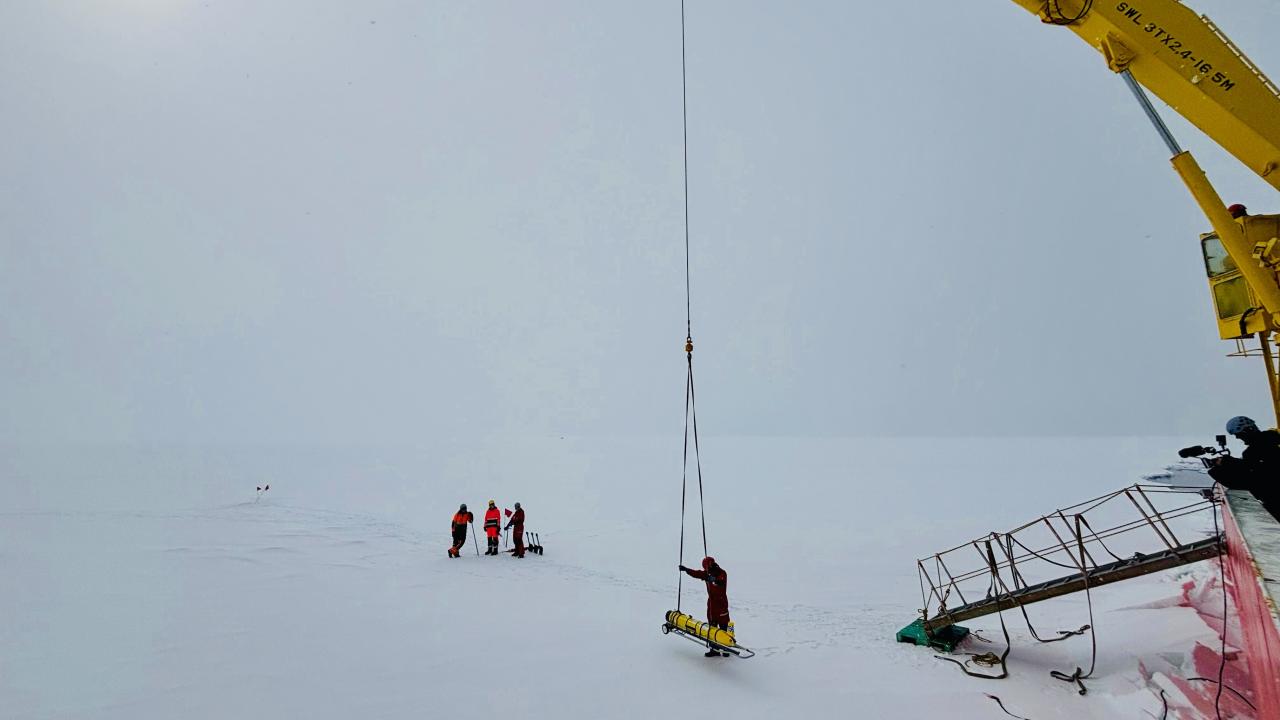
UC Davis scientists are in Antarctica to deploy Gull, an autonomous underwater vehicle known as a glider, that will help us understand how fast one of the world’s biggest and most important glaciers — Thwaites — is melting. Thwaites Glacier and neighboring Pine Island Glacier are potential glacial flow from the West Antarctic ice sheets. If this system collapses, it could raise sea levels across the world.
For the past month, researchers from UC Davis Tahoe Environmental Research Center and the College of Engineering have been on an expedition to Antarctica’s Thwaites and Pine Island Ice Shelves with about 40 other international researchers. They are on the South Korean icebreaker R/V Araon, collaborating with the Korea Polar Research Institute (KOPRI).
New York Times reporter Raymond Zhang and photographer Chang W. Lee are embedded on the journey. Their dispatch today, "An Antarctic Terror: Sending Data to a Watery Grave,” highlighted the UC Davis team’s work and showed just how hard — and how important — it is to successfully fish for a robot in a sea of ice.
A glacier’s fingerprint
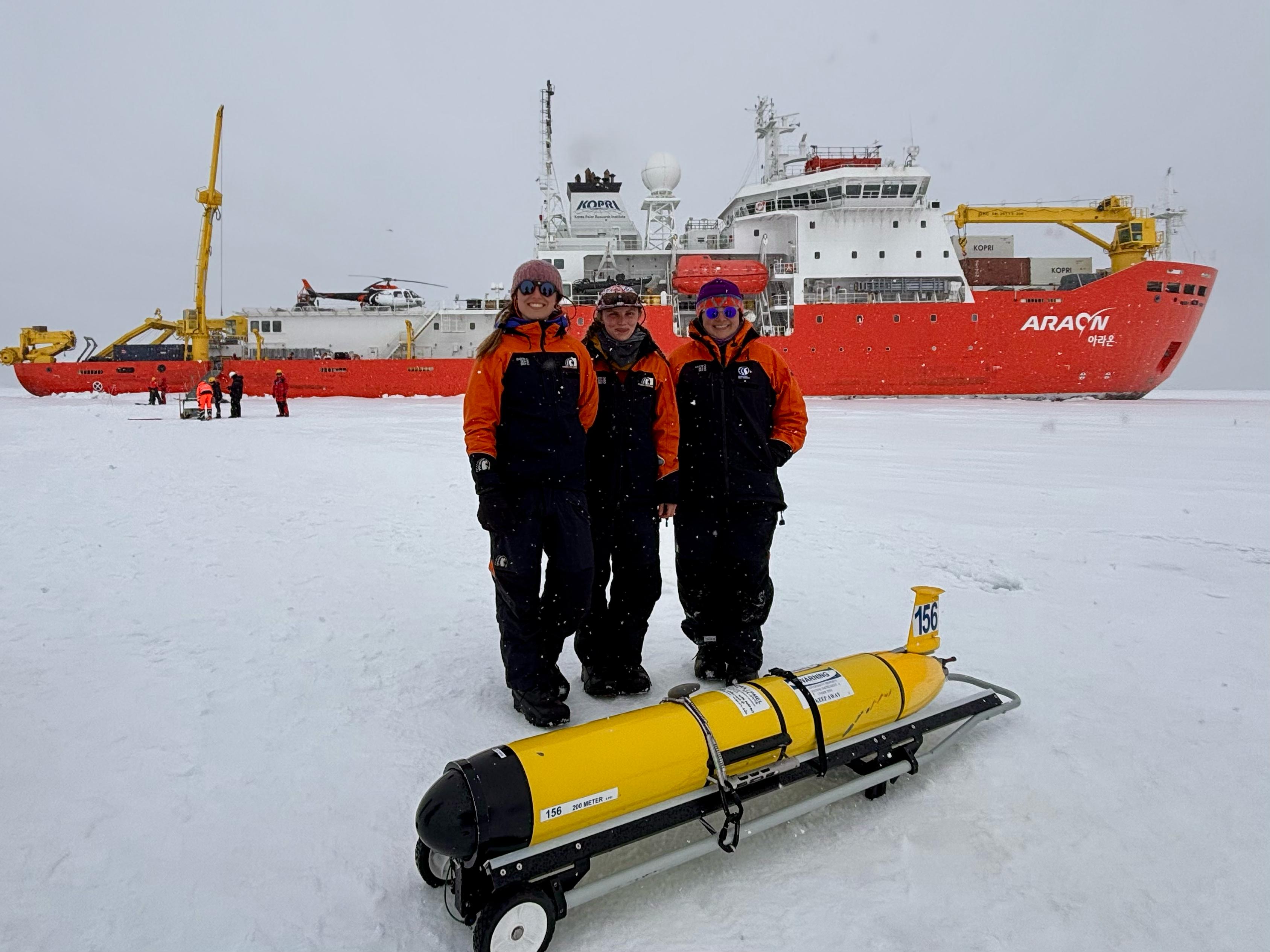
Gull the glider is about 6 feet long, bright yellow and dives under ice and water to measure things like temperature, salinity and oxygen, which helps characterize the types of water present. Meltwater from a glacier has a different “fingerprint” than the water around it, so the glider’s data helps scientists learn how much water is melting off the ice shelf.
“Trying to understand how fast Thwaites is breaking up gives us an understanding of how fast we need to react to that change,” said Alex Forrest, UC Davis associate professor of Civil and Environmental Engineering with TERC and principal investigator for the glider research. “We’re trying to be a small piece informing on how much heat is being transferred to the ice shelf and informing models of how quickly the system will break up.”
He spoke from California, where he and colleagues are remotely piloting the glider, telling it in real time to dodge iceberg fragments or drifting sea ice while coordinating with their onsite crew in Antarctica.
Forrest calls this remote-plus-onsite way of doing operations a “gamechanger,” compared with how they've operated in the past with less reliable communications.
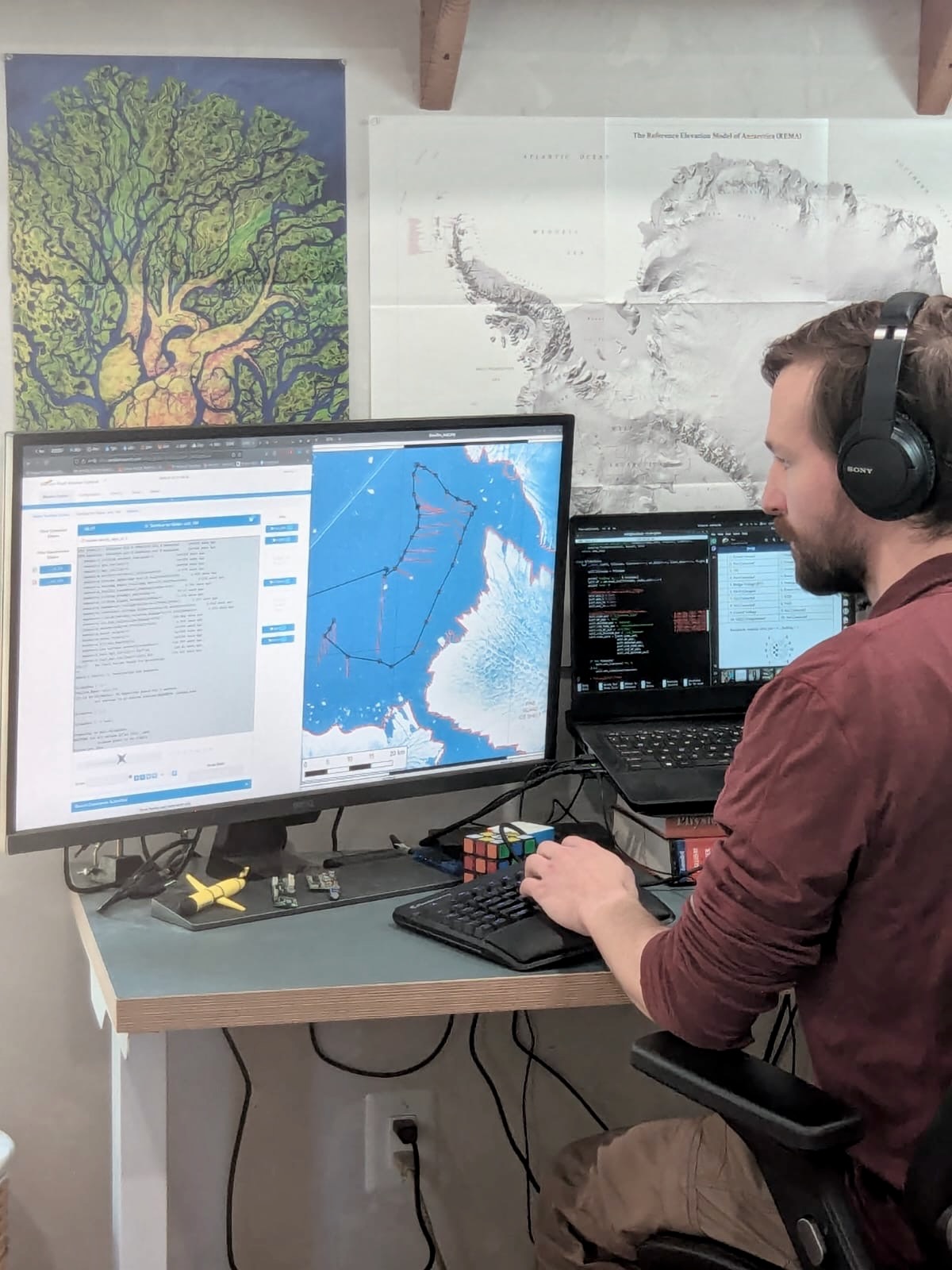
“It’s really exciting that we’re able to bring in expertise and work in real time with these early-career researchers on the boat, who are basically volunteering their time just to be down there on this mission,” he said. “At the same time, it’s exciting for us here to run this in a remote way with satellites. The way communications is happening now is incredible.”
Tahoe as testing ground
Forrest has partnered with KOPRI and NOAA to develop gliders for Antarctic applications, and Lake Tahoe has proven itself an excellent testing ground.
“We use Tahoe to do the training and the testing, and then we go south and do the work,” said Forrest. “Ultimately, I’m interested in all kinds of freshwater, including frozen freshwater and trying to understand meltwater as it enters the ocean.”
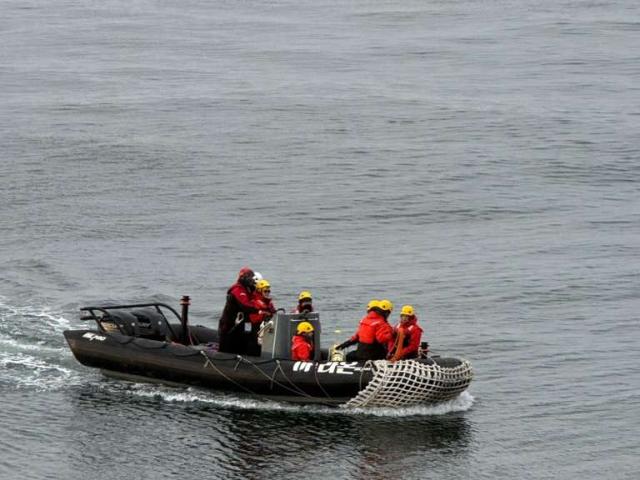
The glider team in Antarctica includes UC Davis graduate student of Civil and Environmental Engineering Brenna Hatch, UC Davis research associate Mahren Hudson and University of British Columbia graduate student Romane Bouchard.
The remote team, working from Davis and Lake Tahoe, includes UC Davis graduate student Kenneth Larrieu, who leads operations, as well as Oscar Sepulveda Steiner and Drew Friedrichs of UC Davis, and Jérémie Bonneau from the University of Laval.
Read the New York Times’ full seriesJourney to a Melting Continent.
Follow along directly with the UC Davis crew on Instagram @ucdavistahoe or LinkedIn by searching for the UC Davis Tahoe Environmental Research Center.
UPDATE: Glider interview with PBS Newshour Classroom
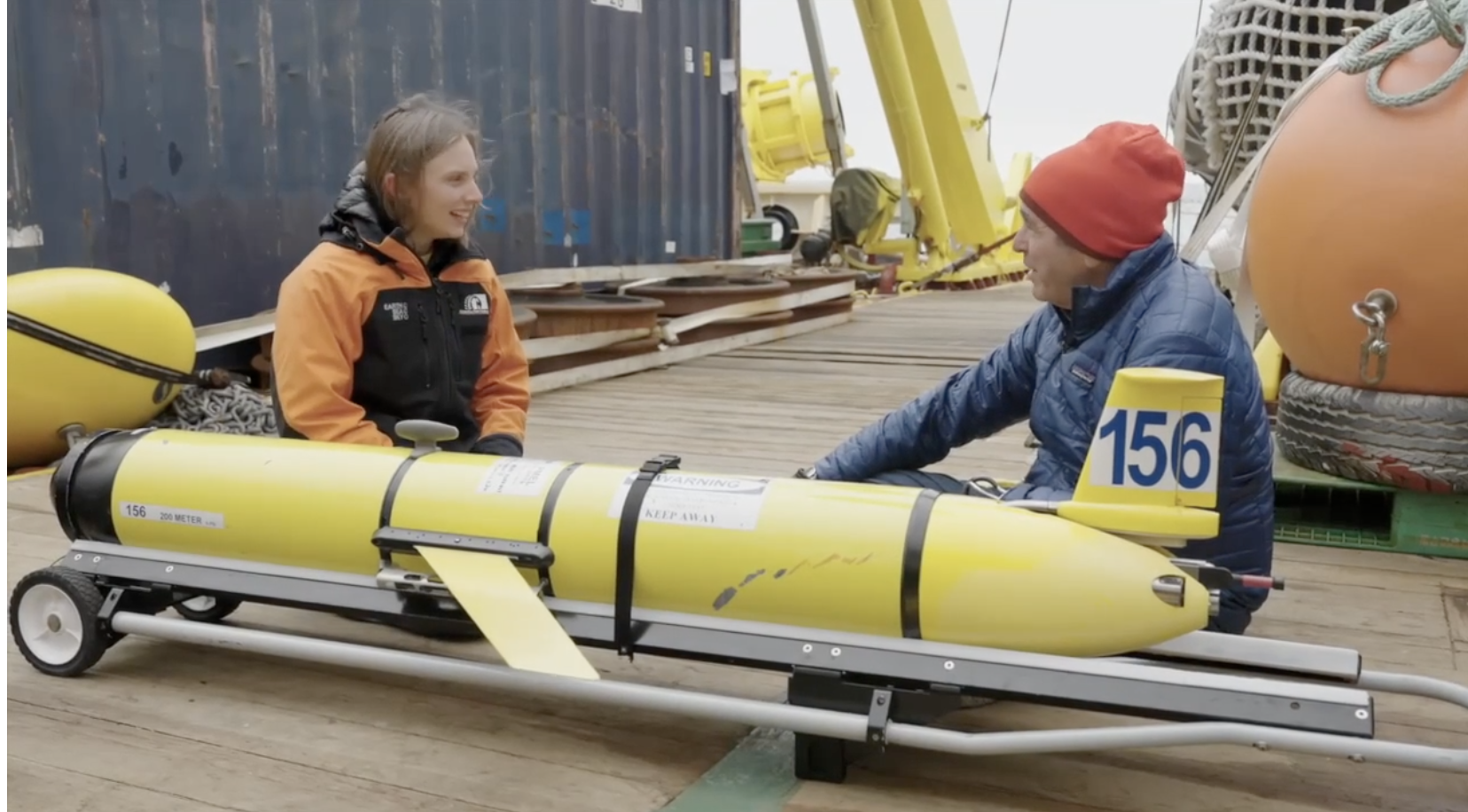
Also aboard the vessel was journalist Miles O'Brien of PBS Newshour Classroom. He sat down with UC Davis research associate Mahren Hudson — and a big yellow glider — to learn the ins, outs, "yo yos" and big picture of how the glider is telling scientists about meltwater in Antarctica.
The segment is part of an Antarctic Science Virtual Field Trip video hosted by PocketLab in partnership with PBS Newshour Classroom and Miles O'Brien Productions and is geared toward middle-school students and their educators.
The 10-minute interview with Hudson begins at the 47:00 minute mark.
This update was made on Feb. 18, 2026.
Media Resources
Kat Kerlin, UC Davis News and Media Relations, 530-750-9195, kekerlin@ucdavis.edu
Images, available for download with credit.