

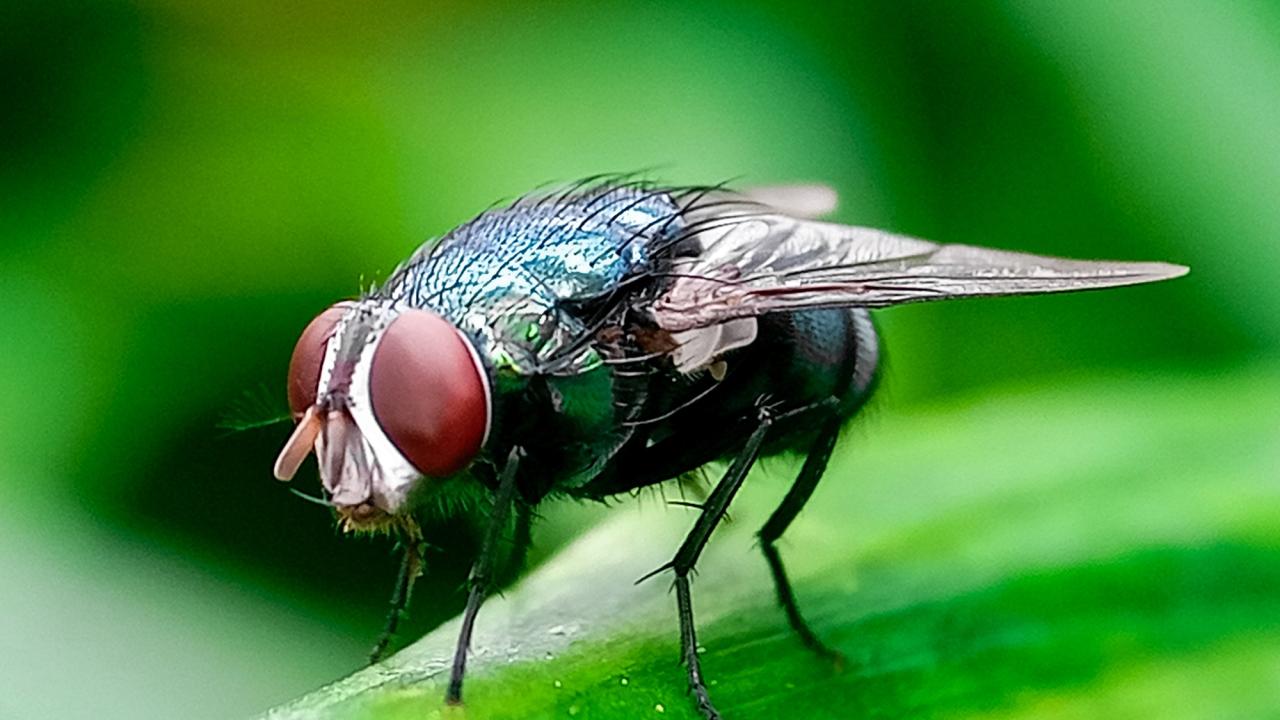
The U.S Department of Agriculture has now confirmed cases of New World screwworm in calves, sheep and goats in Texas and in a dog in New Mexico. New World screwworm is a serious parasitic fly that can affect livestock, pets, wildlife, and less commonly, people and birds. Adult screwworm flies are about the size of a common housefly or slightly larger. Their larvae feed on the living tissue of warm-blooded animals. The following University of California, Davis, sources are available to share their expertise to the media on the topic.
Grace VanHoy is a clinical assistant professor in the Livestock Medicine and Surgery Service at the UC Davis School of Veterinary Medicine and member of the American Association of Veterinary Parasitologists. She is board certified by the American College of Veterinary Internal Medicine and completed a master's degree with emphasis in veterinary parasitology. She can answer general questions regarding New World screwworm, including biology, lifecycle, diagnosis, treatment, and general prevention strategies for livestock. Contact: gvanhoy@ucdavis.edu
Michael Payne is a food animal veterinarian working within the UC Davis Western Institute for Food Safety and Security, or WIFSS. Payne is a nationally recognized expert in biosecurity and can speak to the safety of the food supply and what producers can do to protect their herds. Contact: mpayne@ucdavis.edu, cell: 530-304-9306
Bret McNabb is a clinical professor and director of the Large Animal Hospital at the UC Davis Weill School of Veterinary Medicine. As a livestock veterinarian on the Livestock Herd Health & Reproduction Service, he has experience with the management of cattle and small ruminant health on an individual and herd level. He can answer general questions about New World screwworm, detection and treatment in large animal species, and address food safety concerns. Contact: brmcnabb@ucdavis.edu
Luis Peña-Lévano is assistant professor of Cooperative Extension in Dairy Cattle Production, Health and Management Economics at the UC Davis School of Veterinary Medicine. Peña-Lévano's research is focused on dairy economics and production, financial management, agribusiness, international trade and agricultural and environmental policy. He can discuss the potential economic impact of screwworm on dairy and cattle farms, including milk production disruptions, losses in beef yield, increased farmers’ costs and trade restrictions. Contact: lpenalevano@ucdavis.edu
Jane Sykes is a professor of small animal medicine at the UC Davis Weill School of Veterinary Medicine with a special interest in small animal infectious diseases. She is a member of the California New World SCREWworm (Surveillance, Control, Research, and Education Working group), a joint initiative led by UC Riverside that includes representatives from CDFA, USDA, and the University of California. She can discuss how screwworm can affect domestic pets and steps pet owners can take to protect their animals from screwworm. She has co-authored more than 100 peer-reviewed publications and is the editor of the Elsevier textbook "Canine and Feline Infectious Diseases." Contact: jesykes@ucdavis.edu
Pranav Pandit is an assistant professor of veterinary epidemiology at the UC Davis Weill School of Veterinary Medicine. He leads the development of innovative disease surveillance systems that integrate wildlife monitoring, environmental data, and artificial intelligence to detect emerging health threats. He can speak about New World screwworm surveillance and preparedness, wildlife and livestock disease monitoring, predictive disease modeling, biosecurity, and the application of AI and digital technologies for agricultural and One Health disease response. Contact: pspandit@ucdavis.edu
You can learn more by visiting the UC Davis Weill School of Veterinary Medicine’s Animal Health Topics.