
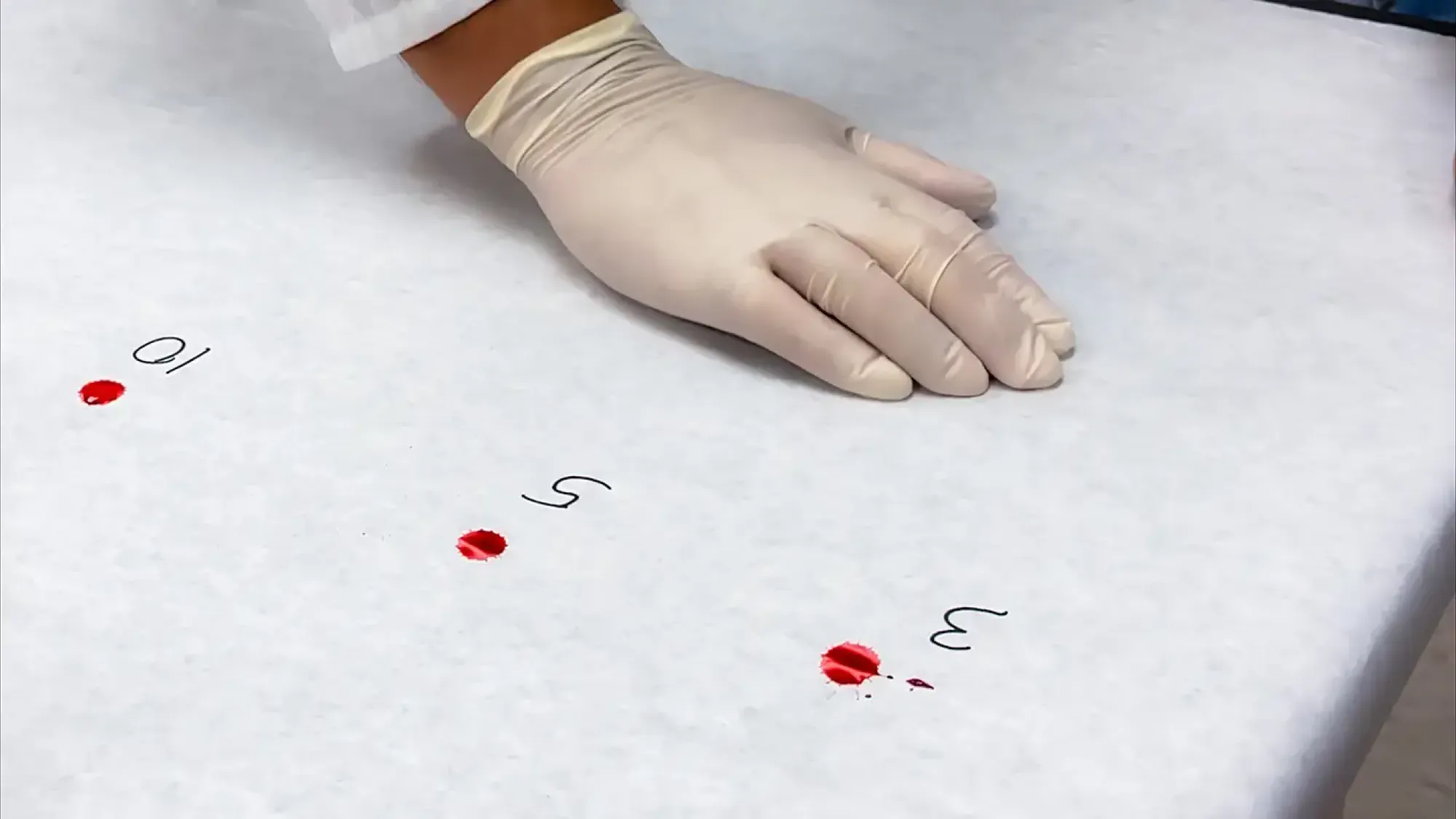
When students talk about why they began their studies in the forensic science graduate program at the University of California, Davis, popular culture comes up a lot.
For Brittany Huntington, now a forensic chemist with the U.S. Drug Enforcement Administration, it was watching “The X-Files” as a child. Current student Sam Dicks was hooked by a nonfiction book about investigating homicides in Baltimore. And recent graduate Aldrin Alviar enjoyed crime shows and movies in his native Philippines long before setting his sights on the UC Davis program.
Pop culture doesn’t necessarily give an accurate picture of forensics work, of course.
“[Pop culture] drives it more at the undergraduate level than at the graduate level,” said Program Director Ashley Hall, who exited this summer. “By the time they get to us, they have a better idea of what it is.”
The UC Davis Master of Science program in forensic science was established in 2003 to give the people who investigate crime scenes and develop evidence a thorough grounding in science and how to apply that knowledge in pursuit of justice.
In March of this year, the program earned accreditation from FEPAC, the Forensic Science Education Programs Accreditation Commission, overseen by the American Academy of Forensic Sciences.
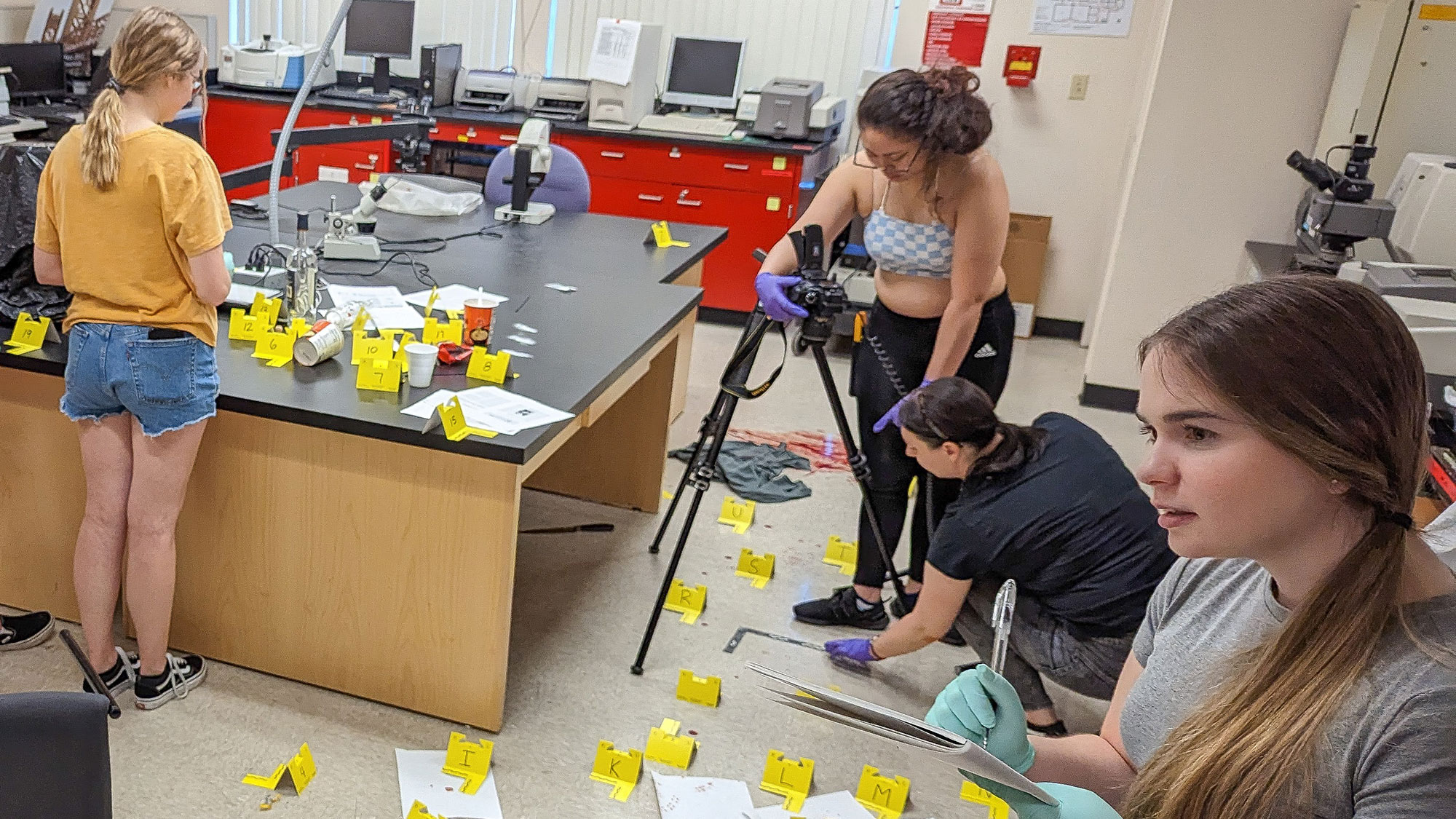
The UC Davis program currently enrolls 55 students and is administered through Continuing and Professional Education. It’s one of just 21 FEPAC-accredited programs in the country and the only one west of Oklahoma. As well as learning homicide crime scene investigation and how to prepare and write forensic reports, students can choose between tracks in criminalistics, focusing on instrumental analysis, trace evidence, toxicology and drug chemistry; or forensic DNA analysis.
Original research is a key part of the UC Davis forensics program: Students must complete a thesis to earn their M.S. degree. That research experience sets up graduates for their careers, Hall said.
“As our field grows and advances, you need to be able to grow and advance with it. We don't teach you everything you need to know, but we teach you how to learn,” Hall said. “Our program sets people up for success, now and in the future.”
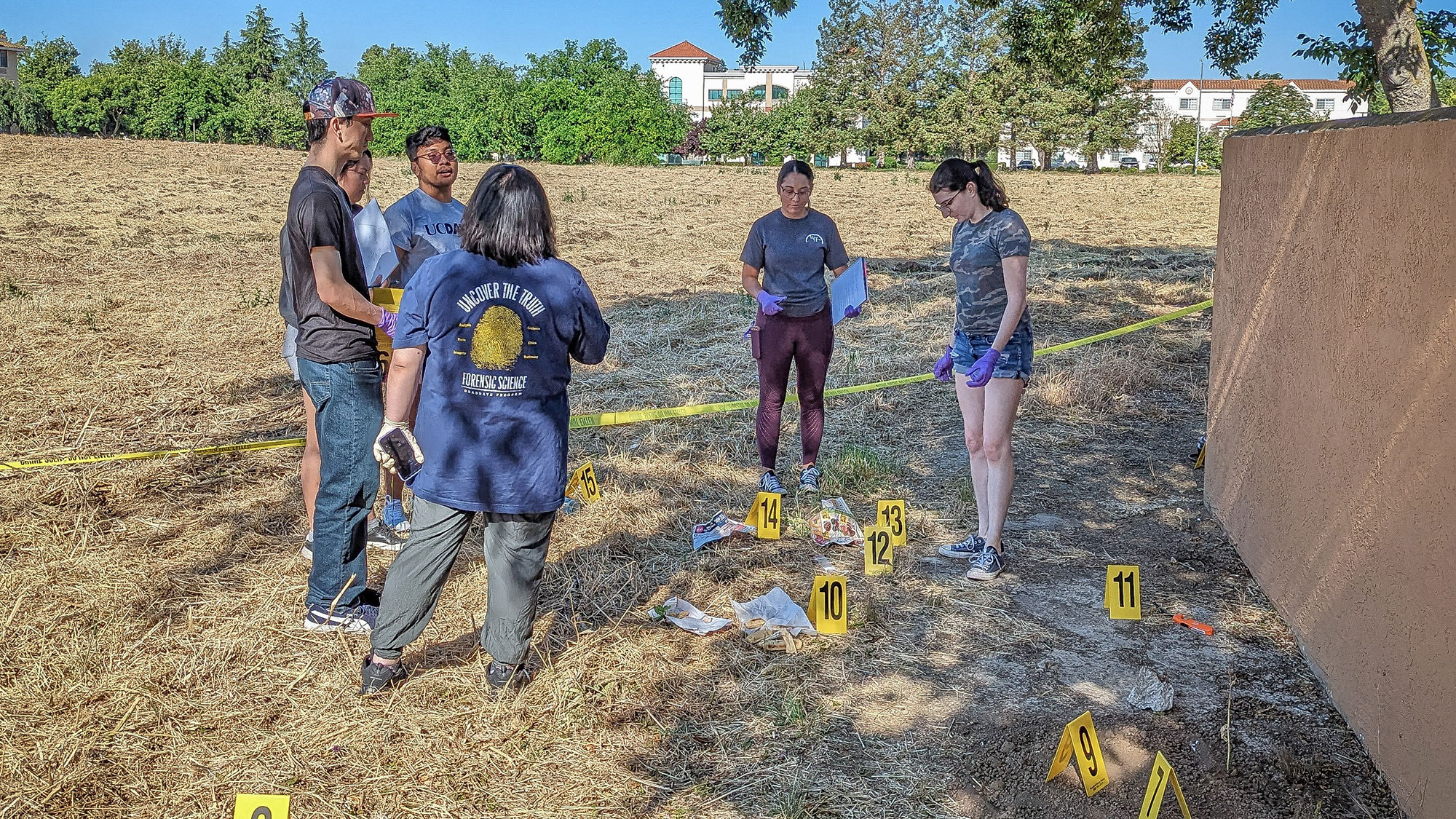
From UC Davis to the crime lab
Joy Viray was one of the first students to enter the program. After earning a bachelor’s degree in genetics from UC Davis in 1998, she worked in the laboratory of the late Professor David Glenn Smith — a pioneer in the testing of ancient DNA in archaeology — in the UC Davis Department of Anthropology. She heard about the nascent program and asked if she could join. Viray continued classes after joining the Sacramento County crime lab in 2001, graduating in 2008.
Getting her M.S. degree led to promotion to DNA technical leader at the Sacramento County lab. Every forensic DNA lab in the country requires a DNA technical leader with a graduate degree, Viray said. That person oversees DNA technical operations and is approved by the FBI to access the Combined DNA Index System, or CODIS, the national law enforcement DNA database.
Viray worked in the Sacramento County lab ever since, retiring in March this year. Since 2022, she has helped teach a DNA lab course for the UC Davis program in spring quarter. Many of the program’s faculty are working law enforcement professionals from county and state crime labs, teaching alongside UC Davis professors from fields such as anthropology and environmental toxicology.
“A great thing about the faculty is that they have worked in crime labs and know what the current technical and legal issues are,” Viray said.
DNA work after graduation
Aldrin Alviar graduated from the program last year and is currently working at the California Department of Justice laboratory in Richmond, uploading DNA data to state and national databases.
“The faculty are experts in their fields and provide a lot of advice you don’t find in textbooks, about how to get a job, how to testify in court,” he said.
Growing up in the Philippines, Alviar caught the forensics bug from movies and TV shows. After earning a bachelor’s degree in agricultural biotechnology and working for a time in the sugarcane industry, he came to UC Davis as one of a small number of international students in the forensics program.
“Davis was my dream school because it’s No. 1 in agriculture,” Alviar said. “When I started looking for forensics programs, I was so happy to find we also have forensics!”
Hall hired Alviar as a graduate student researcher to work on a project on transfer DNA funded by the National Institute of Justice.
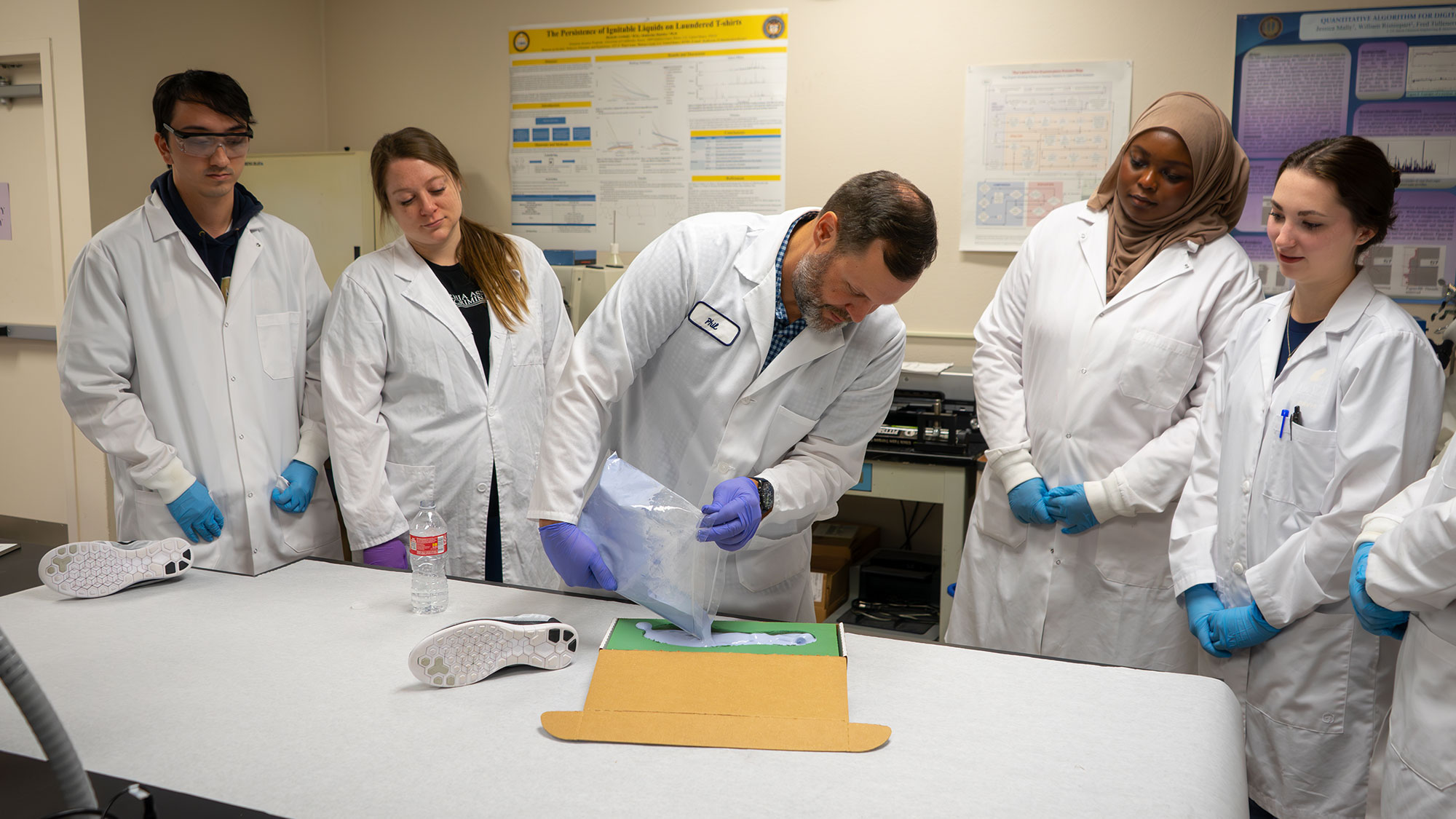
Transfer DNA evidence
Crime labs are now able to make identifications based on very small traces of DNA. But this creates a problem: If your DNA is found on, for example, the handle of a knife, was it there because you handled the knife, or was it accidentally transferred to the knife from something else you touched?
“Is it your DNA you left on something, or is it because you shook somebody’s hand who then transferred it?” Hall said. “There's a lot of science we need to learn about how DNA transfers and what happens when it gets put down.”
The issue was raised, for example, by defense attorneys in the case of the November 2022 murder of four students at the University of Idaho.
Hall’s lab has been investigating the problem of DNA transfer in the laboratory and working out the statistics to show with confidence that a DNA trace was left by someone who actually handled an object.
Alviar has presented this work at conferences, and he is a coauthor on a pending scientific paper.
“I was so lucky to get hired for this project — the things I have learned have helped me look for jobs,” he said.
Nadia Cisse’s thesis research looked at the DNA not of humans, but microbes. Different body fluids have different communities of microbes, she said, so using microbe DNA to track body fluids — saliva, for example — across a crime scene may be possible. And experts still can analyze the same DNA extract for human identification.
“It’s really exciting actually,” Cisse said. “It doesn’t affect human DNA testing so it’s useful if you don’t have a lot of sample.”
Cisse, who is originally from the Caribbean nation of Trinidad and Tobago and graduated last year, is also now at the state DNA lab in Richmond, undergoing training.
“It’s exactly what I wanted to do,” she said.
An ‘X-Files’ fan, now forensic chemist at the DEA
Watching “The X-Files” as a kid growing up in the Bay Area led Brittany Huntington to a career in forensics.
“Knowing that I wanted to go into some sort of crime-solving type of job, I don't have the guts to carry a gun, and I’m strong in math and science, so in high school I decided that I should go the lab forensics route,” she said.
After earning a bachelor’s degree in chemistry with a minor in criminal justice at Northeastern University in Boston, Huntington came to UC Davis in 2007 to study for her M.S. in forensic science. Today, Huntington is a senior forensic chemist at the U.S. Drug Enforcement Administration’s lab in Pleasanton.
“I was hired by the DEA two weeks after graduation,” she said.
The lab carries out drug analyses for the DEA and other federal agencies across California and several western states.
“Predominantly the DEA, but also FBI; Bureau of Alcohol, Tobacco, Firearms and Explosives; Bureau of Indian Affairs send us all their drug evidence, and we analyze it here,” Huntington said. Occasionally, she is called on to testify about her labs’ work.
“Very rarely, I have to go out to crime scenes or clandestine laboratories and help with their sampling and their cleanup and their hazardous waste.”
The UC Davis program jumpstarted her career, Huntington said.
“I definitely wouldn't be working here if I hadn't gone through that program,” she said. “Someone from the DEA was invited to present to our class on what it's like to work for this lab, and I was like, ‘That's what I want to do.’ And if that hadn't happened, I'm not sure what I would have been doing.”
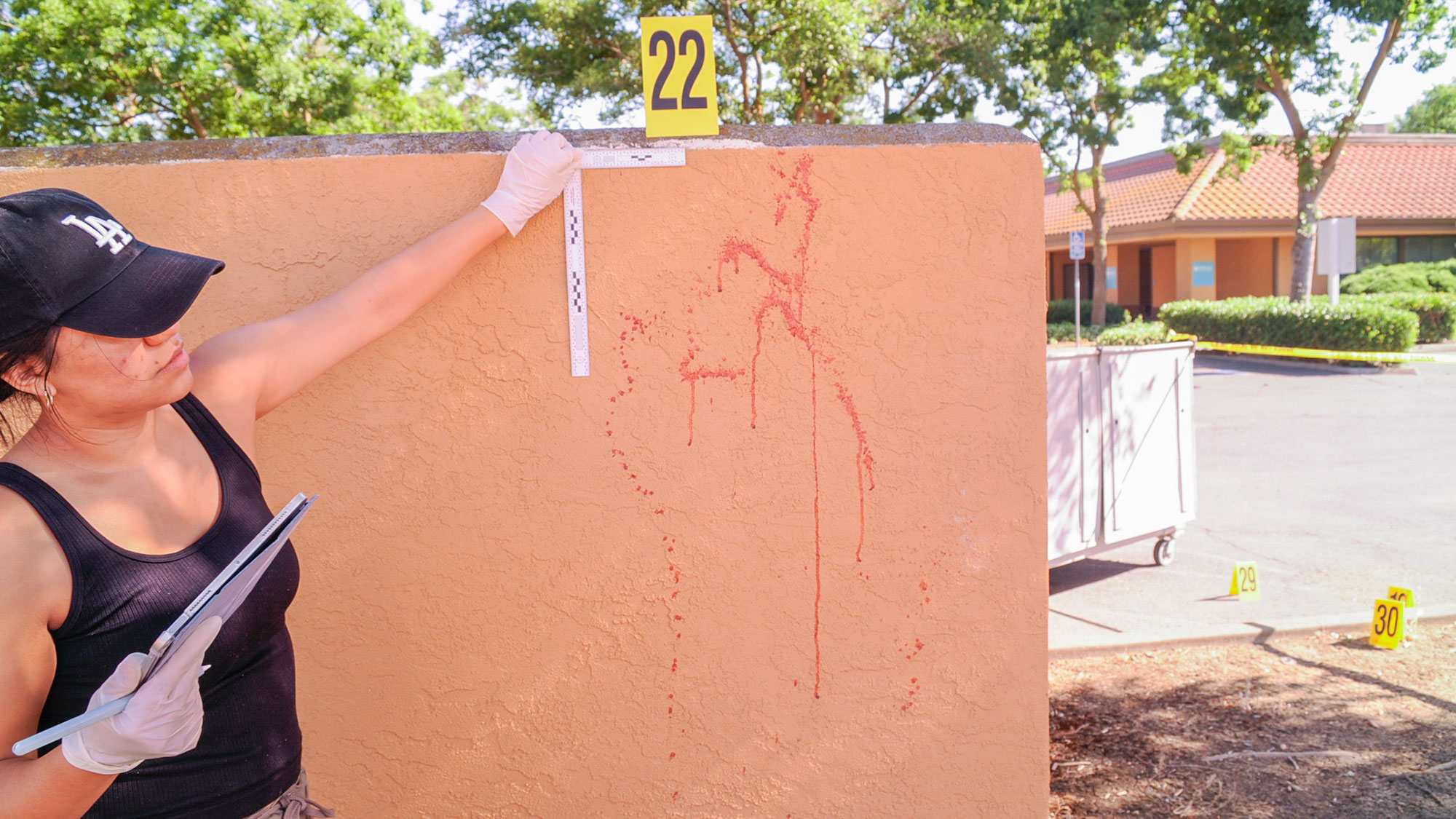
Using forensic science to find wartime crash sites
Jelmer Eerkens, professor of anthropology, is one of the UC Davis professors who teaches in the program. His research uses chemical analyses to understand how ancient people lived. There’s a clear link between methods for analyzing archaeological samples and forensics, he said — but in forensics, the remains in question are generally much more recent.
For the past five years, Eerkens has been involved with a project led by the Defense POW/MIA Accounting Agency, or DPAA, to investigate sites in Poland and Germany where American aircraft are thought to have crashed during the World War II.
In summer 2025 and again this summer, the UC Davis Department of Anthropology has offered an Archaeology Field School, in conjunction with DPAA and the Alta Archaeological Heritage Foundation, at an aircraft crash site in Poland. The course is led by Eerkens and Professor Christyann Darwent.
The students taking the summer class are mostly anthropology majors, with some forensic science students, including Sam Dicks.
Originally from Michigan, Dicks became interested in forensics after reading Homicide by David Simon, a nonfiction account of a year Simon spent embedded with the Baltimore Police Department’s homicide unit in the 1980s.
“I found the work that they did, especially in crime scene investigation, to be really interesting, how meticulous and documented everything was, and I kind of saw a career for myself,” he said.
Dicks earned his bachelor’s degree at Loyola University in Chicago and came to UC Davis for the M.S. in forensic science.
“I've really liked the program. I was a little bit nervous coming out here. I've lived in the Midwest my whole life, but the program felt really welcoming,” he said.
Dicks collected samples at the field school last summer and is now analyzing them for elements such as aluminum, copper, zinc and iron. Some of the analyses are being carried out at the Crocker Nuclear Laboratory at UC Davis.
“We are doing both elemental analysis and pH testing on them. The hope is to identify some sort of chemical signature that can be used to locate airplanes. So not just from an archeological context, but also a forensic one,” he said.
If they can identify a chemical signature for a wrecked aircraft, that might help in identifying other crash sites from soil samples.
“In a lot of cases, people may try to hide the surface evidence, but you can't get rid of all the evidence, so something like this maybe could contribute toward a better understanding of how such an event modifies the soil and whether or how long that persists,” Eerkens said.
Dicks is still analyzing the samples and does not have results yet. The field school was a great experience, he said.
“I really enjoyed the impact of the work. I felt that it was very important to do, even if it was just for a field school. It felt like it had a lot of weight,” he said.
Training the next generation of forensic scientists
The program continues to grow and attract students. In the near future, Continuing and Professional Education could move the program to a new building with more space for students and consider a hybrid online option. The program already offers a summer program for high school juniors and seniors.
“There's a tremendous need for people trained in various parts of forensic sciences. But there isn't a very good pipeline for that. That's how the program here came about,” Eerkens said.
Added Huntington: “I've always been really thankful that this program exists.”