
Five UC Davis faculty and staff have been named 2026-27 UC Dialogue Fellows for projects they will lead to advance the teaching and practice of dialogue across differences.
This is the first year for the fellowship, and 18 faculty and staff from six UC campuses have been named to the inaugural cohort of fellows, each receiving a $5,000 grant.
“Through 18 innovative projects spanning disciplines from science and medicine to the arts, classics and communication, fellows will develop and expand curricular resources while building a systemwide community of practice dedicated to strengthening dialogue as a foundation for learning, civic engagement and democratic participation,” the UC Office of the President said in its announcement.
Angelica Guercio
Assistant professor of teaching, Department of Molecular and Cellular Biology
‘Scientific Dialogue as Authentic Practice: A Scalable Model for Large-Enrollment Courses’
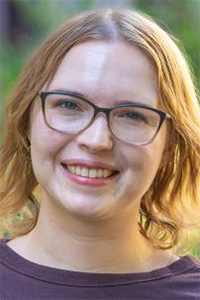
Guercio describes the project as “a scientific dialogue activity in a large-enrollment genetics course serving more than 400 students per quarter. Building from an existing science communication assignment, the project will move students beyond communicating to another person toward practicing true dialogue with another person. Students will encounter another perspective, practice inquiring and listening and finally respond, adapt and reflect on the interaction. The goal is for students to learn how to engage with people who bring different perspectives and expertise to a conversation and to approach these conversations as opportunities to build something together.”
A central focus of Guercio’s teaching and scholarship is how we can provide students with opportunities not only to gain disciplinary knowledge, but to practice meaningfully participating in their disciplines, as a part of a broader program of “Belonging Through Practice” — helping students think, work and engage with others as developing professionals while building their sense that they belong in STEM.
“In the classroom my students are becoming experts in science, but knowing the content is only part of what they will do as scientists,” she said. “They will have conversations with peers, patients, families, communities and the public, including people who understand or experience science differently than they do. Yet, we rarely give students explicit opportunities to practice having those conversations.”
Heather J. Hether
Associate professor of teaching, Department of Communication
‘The TICLE Toolkit: Developing Skills for Dialogue across Difference’
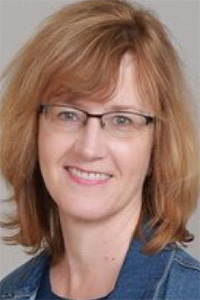
Productive dialogue requires a diverse set of competencies. This project integrates these competencies and their theoretical underpinnings into one cohesive framework, designed to help students apply these competencies in dialogue with people who hold different opinions, beliefs and values.
The model describes four stages of engaging in dialogue across difference: topic identification, communication, listening and examination, or TICLE. The memorable acronym reflects the idea that dialogue — as a “tickle” — can be a stimulus for change. In this case, a meaningful change may be a shift in knowledge or attitudes, including greater openness to diverse worldviews and perspectives.
Each stage is anchored in theory and includes recommended skills that can be developed with the support of the toolkit. Acquiring the skills associated with each stage is important for engaging in dialogue and realizing its potential for greater understanding and insight. The goal of the model is not to resolve difference, per se, but to support students in developing a skill set reflecting key competencies, including critical thinking, communication, listening and metacognition. Grounded in established theories, these competencies support thoughtful engagement in dialogue.
Hether teaches courses in interpersonal communication, group communication, public relations and communication campaigns, seeking to help students translate communication theory into practical skills they can use in their lives. Her student-centered approach encourages discussion and collaborative problem solving, giving students opportunities to apply what they learn and practice the skills that support productive dialogue.
Paula Levitt
Director of Global and Intercultural Programs, UC Davis Global Learning Hub in Global Affairs
‘Dialogue in Practice: Building Intercultural Leadership Through Peer Mentorship’
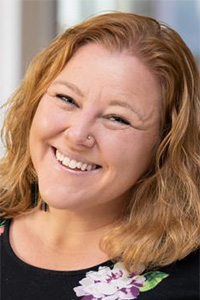
This project will strengthen dialogue skills through Global Affairs’ Global Ambassador Mentorship Program, which supports first-year and incoming transfer international undergraduates as they transition to UC Davis. It is led by Levitt, in collaboration with Kimberly Bellows and Kim Notehelfer.
The team will develop and pilot short dialogue activities in EDU 160A: Intercultural Leadership, the course students take before becoming mentors. Mentors will practice deep listening, asking meaningful questions and navigating differences, then apply those skills in relationships with international student mentees. The team will also create a digital repository of activities for use in other courses and campus programs.
“The mentoring relationship gives students a place to keep practicing,” Levitt said. “They can take something they learned in class, try it in a conversation and reflect on what they learn. We want these skills to become part of how students build relationships across cultures, both at UC Davis and beyond.”
Megan Macklin
Director of campus climate and inclusion initiatives, Office of Campus and Community Relations/Inclusive Excellence
‘Reading to Understand, Listening to Hear: Developing an Undergraduate Seminar on Text-Based Dialogue’
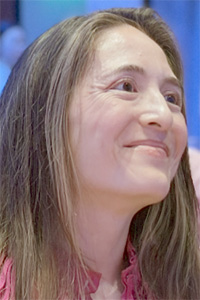
For 25 years, the UC Davis Campus Community Book Project has brought students, faculty, staff and community members together around shared reading and dialogue. Now, a new collaboration between UC Davis Inclusive Excellence, the School of Education and campus partners will bring that experience into the classroom.
Led by Megan Macklin, director of Campus Climate and Inclusion Initiatives in Inclusive Excellence, the collaborative project, “Reading to Understand, Listening to Hear: Developing an Undergraduate Seminar on Text-Based Dialogue,” has been selected for the inaugural University of California Dialogue Fellows Program, which supports innovative approaches to teaching dialogue skills across the UC system.
The fellowship will support the development of a new undergraduate seminar and practicum that uses the Campus Community Book Project as a model for teaching dialogue skills to future educators, and the Principles of Community as a foundation for co-creating a curious, inclusive classroom culture. Developed in partnership with the School of Education, Davis Humanities Institute and California History-Social Sciences Project, the curriculum will help students learn how to facilitate thoughtful conversations around complex topics.
Read more about Macklin’s project
Amir Saeidi
Assistant professor of teaching, Department of Materials Science and Engineering
‘Engineering Dialogue Under Disagreement’
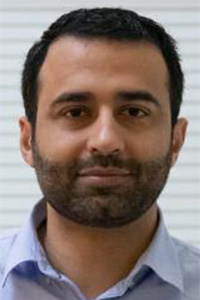
This project gives engineering students a real-world failure case to investigate in teams. After learning how to communicate constructively during technical disagreement, teams will examine technical evidence and physical specimens, research possible failure mechanisms and develop competing explanations for why the failure occurred.
The teams will then participate in a structured technical hearing, presenting and defending their analyses before the instructor and, where possible, invited experts. The goal is not simply to win an argument. Students must accurately explain the opposing team’s position, respond to counterevidence, identify uncertainties in their own analysis and state what additional evidence or testing could change their conclusion. The project assesses both students’ technical reasoning and their ability to engage professionally and productively with disagreement.
It will be led by Saeidi, whose teaching extends beyond technical knowledge to prepare students for professional practice. In particular, he helps students develop clear communication skills and learn to navigate disagreement constructively. He emphasizes that conflict in teamwork is not inherently negative or something to avoid; when approached thoughtfully, it can reveal different perspectives, strengthen working relationships and improve the quality of both the process and the final work.
Media Resources
Cody Kitaura is the editor of Dateline UC Davis and can be reached by email or at 530-752-1932.