
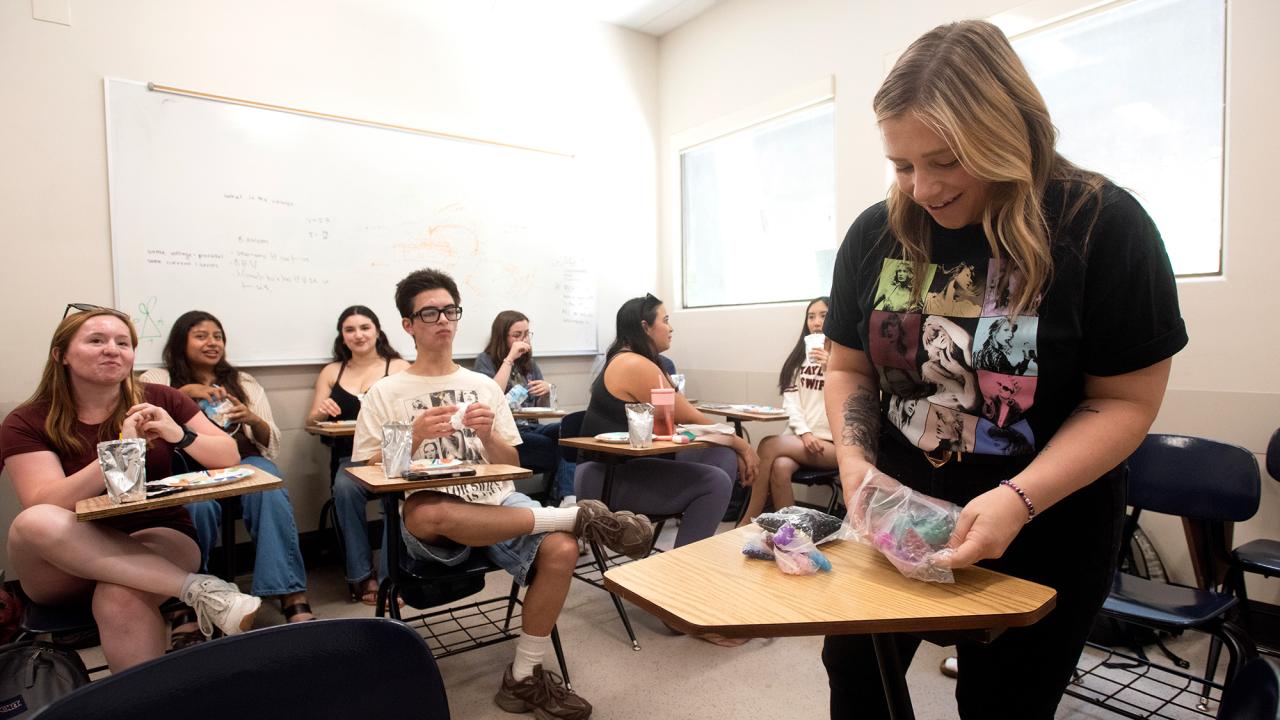
UC Davis students are examining the folklore and mythology of Taylor Swift lyrics, and all in the name of modern literature.
“Folklore and Fairytales: the Literary Words of Taylor Swift” is a one-unit first-year seminar that treats Swift’s songwriting as a serious object of literary study, incorporating readings, discussions, creative analysis, and, of course, listening sessions. The course is open to all undergraduates, with preference given to first-years, and is offered through the Office of Undergraduate Education.
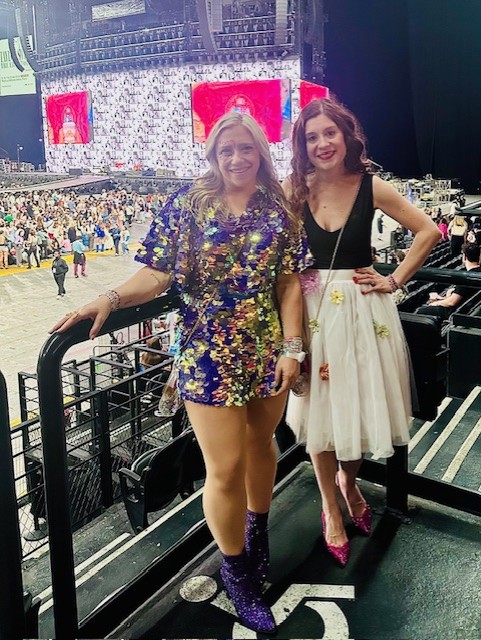
Alison Moore, a lecturer in the UC Davis Writing Center, developed the class. Moore is a self-described Swiftie, though not one from the start — her entry point was Swift’s fourth studio album, “Red”. “The lyricism and the storytelling that was happening across that album, it just spoke to me,” she said. “It was so different, I think, than a lot of things I had listened to, and it was just relatable.”
She described the course plainly as “two nerd interests that I have.” With a longstanding belief that writing is a tool for empowerment, Moore saw Swift’s catalog as a way to explain complex topics through a passion students already cared about.
The course launched in spring 2026. Moore was surprised at how quickly it filled. “I eventually opened it up to additional students as the classroom space would hold,” she said. “The Eras Tour, I think, really brought a lot of people together from different generations.”
Each week uncovers a new song, using it as a lens to explore storytelling techniques. Recently, the class unpacked “Wonderland,” a song on Swift's album “1989”, discussing its Alice in Wonderland imagery, Cheshire Cat references, and the way Swift's pacing and pronunciation mirror the emotional arc of falling into chaotic love. “A lot of folks might not think of ‘1989,’ a pop album, and classic literature references and literary devices,” Moore said, “but there's a lot happening in that song.”
One unexpected development has been the analysis of sound itself. The discussion came up organically during class, prompting Moore to take a closer look with her students into the use of melodies and sound in Swift’s music. The tempo slows in reflection to calm or safe lyrics, but might speed up in moments of uncertainty.
“I never thought that I would be able to create a college course that could talk about Taylor Swift, her lyrics, literature, writing, and the impact on pop culture,” Moore said, “but here we are.”